Panjit International Inc. 1.5SMCJ6.0CA_R1_00001 — Circuit Protection

Panjit 1.5SMCJ6.0CA_R1_00001 TVS Diode, 6V 1.5kW SMC

MPN1.5SMCJ6.0CA_R1_00001
Active

Panjit International Inc. 1.5SMCJ6.0CA_R1_00001, Zener bidirectional TVS diode, 6V standoff, 10.3V max clamping, 145.6A peak pulse, 1500W, DO-214AB SMC surface mount.

$0.6500Ref. price · indicative, final on quote
Independent supplier — new & surplus stockAuthenticity-screened · ESD-safe packingListing updated Aug 2026

Specifications

1.5SMCJ6.0CA_R1_00001 specifications
ParameterValue
TypeZener
Series1.5SMCJ
MountingSurface Mount
Voltage - breakdown6.67V
Voltage - clamping (Max) @ ipp10.3V
Voltage - reverse standoff6V
Current - peak pulse (10/1000μs)145.6A
Power - peak pulse1500W (1.5kW)
Power line protectionNo
Operating temperature-55°C~150°C(TJ)
PackageTape & Reel (TR); Cut Tape (CT)
ApplicationsGeneral Purpose
CaseDO-214AB, SMC
Bidirectional channels1

Product details

6 V standoff, 10.3 V clamping — what the numbers mean

The 1.5SMCJ6.0CA_R1_00001: The reverse standoff of 6 V sets the working voltage — the circuit runs undisturbed below this level.

SMC package for reflow assembly

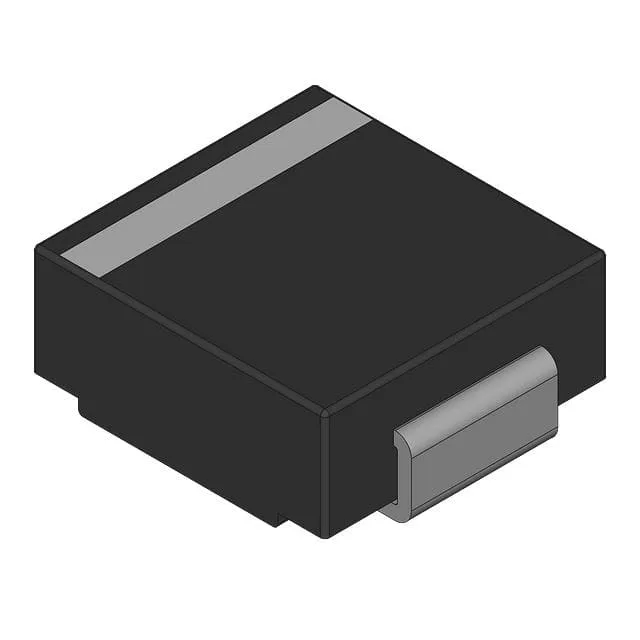
The DO-214AB (SMC) package is the standard half-Watt TVS footprint — cathode band marks the orientation, which matters for the bidirectional CA variant since the part conducts in both directions once the standoff threshold is exceeded in either polarity. Tape-and-reel and cut-tape packaging suit both high-volume pick-and-place and low-volume rework.

Bidirectional CA suffix — not a power-line TVS

The CA suffix marks this as a bidirectional TVS — it protects against transients of either polarity, which is the right choice for AC rails, differential signal lines, or any node that swings both above and below ground. The listing explicitly notes power line protection as a no for this part number, so it is designed for general-purpose point-of-load transient suppression, not for direct line-frequency AC mains clamping.

Frequently asked questions

What does the CA in 1.5SMCJ6.0CA mean?

The CA suffix marks a bidirectional polarity — the diode clamps transients in both directions, unlike a unidirectional CA variant that blocks only one polarity. For a 6 V rail that can ring above or below its nominal level, the bidirectional rating is the deciding factor.

What is the difference between the 6 V standoff and the 10.3 V clamping voltage?

The 6 V standoff is the working voltage the circuit operates at without any conduction. The 10.3 V clamping voltage is the maximum the diode allows the protected node to reach during a surge event — that ceiling is what the downstream IC or load sees, and it must stay within the absolute-maximum rating of whatever is being protected.