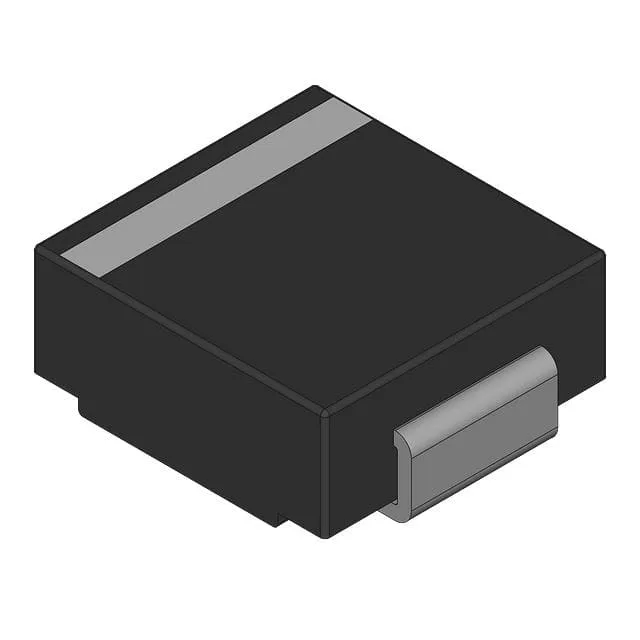
What the 1.5SMCJ58A_R1_00001 does
Its reverse standoff of 58V defines the working voltage of the node it protects — above that, the device avalanches into conduction and clamps the transient to 93.6V maximum at the 16A peak pulse test current.
Clamping voltage and what it means for downstream circuits
The 93.6V clamping maximum at 16A is the voltage the protected node sees during a transient event — this is the number that determines whether the downstream IC or MOSFET survives. Without the clamp in place, the full surge propagates to the next stage; with it, the voltage is held within the downstream absolute-maximum rating. The 16A peak pulse rating is the test condition (10/1000µs), not the fault current the device would interrupt in a short-circuit — the TVS is a clamping device, not a fuse. The energy absorbed during the event is a function of the peak pulse power and pulse width; the 1500W rating sets the energy ceiling the package can safely dissipate without thermal runaway.