Clamping envelope — what 54V standoff and 1.5kW mean in practice
The 1.5SMCJ54A_R1_00001: The 54V reverse standoff sits below the 60V minimum breakdown — the diode stays off the line under normal operating conditions. That 1.5kW peak pulse rating is the one that determines whether the part survives the clamping event on a given rail — the holding current and energy absorption capacity are what the protection circuit designer is actually buying.
Form factor and reel logistics
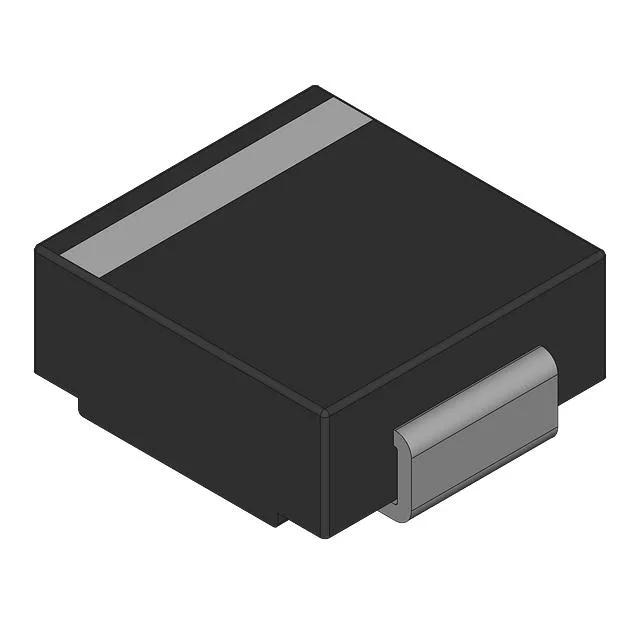
DO-214AB (SMC) is the mid-power TVS footprint — larger than SMB, smaller than SMD. Surface-mount reflow attaches the part to the board; the cathode bar on the package is the visual polarity marker. CT works for prototypes and short runs. Confirm the reel orientation and wound-cathode-first requirement with the assembly house before the first build, since tape-sealed SMC does not have a standard polarity peel direction across suppliers. No power-line-protection designation on this variant — the 1.5SMCJ series covers general-purpose transient suppression, not specifically certified for IEC 61000-4-5 AC-mains protection. If the target is a 48V industrial rail or PoE supply, verify the clamping energy at the specific surge level required — the 1.5kW rating at 10/1000µs may need to be de-rated against the actual test waveform in the applicable standard.