What the 48 V standoff and clamping voltage mean for your protection design
The 1.5SMCJ48CA_R1_00001: The 48 V reverse standoff is the working voltage — below 53.3 V minimum breakdown the TVS stays off and adds no load to the line. When a transient exceeds that threshold, it clamps the overvoltage at 77.4 V maximum, protecting whatever sits behind it from the spike. Bidirectional (the CA suffix) means it clamps both polarities — suitable for AC signal rails or any line where the clamped voltage stays below the downstream absolute maximum at both polarities. The junction temperature rating of -55°C to 150°C gives plenty of margin for industrial enclosures that run hot, or for automotive under-hood adjacent panels that see cold soak and heat cycles.
Package and what it means for board integration
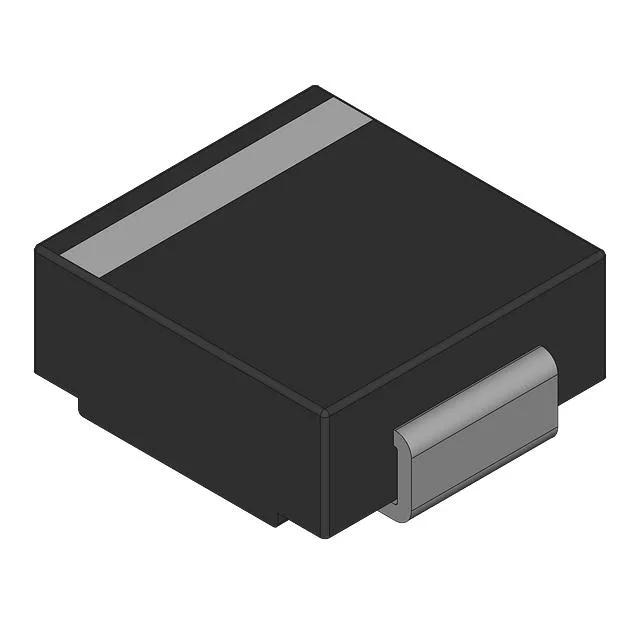
The DO-214AB SMC is the industry-standard high-power TVS footprint — pin-compatible parts are available from multiple brands, and it is a standard pick-and-place package. The cathode band marks polarity on the standard orientation. Reflow profile follows the standard tin-lead or lead-free reflow schedule for the package size; a hot-air rework tool handles field swaps without special tooling.
What the series and ratings say about fit
The 1.5SMCJ series is the 1500 W peak-pulse class — one step below the 3.0SMCJ series (3000 W) in the same SMC package, so a buyer cross-shopping on power will find it is the mid-range option in this footprint. The spec sheet lists general purpose applications with power line protection marked No — this is a signal and control line transient suppressor, not a mains-supply clamp, which is the key distinction if someone is evaluating it for a power rail protection role.
No stock-holding claim is made; the sourcing posture is BOM-driven quotation against the listed order code.