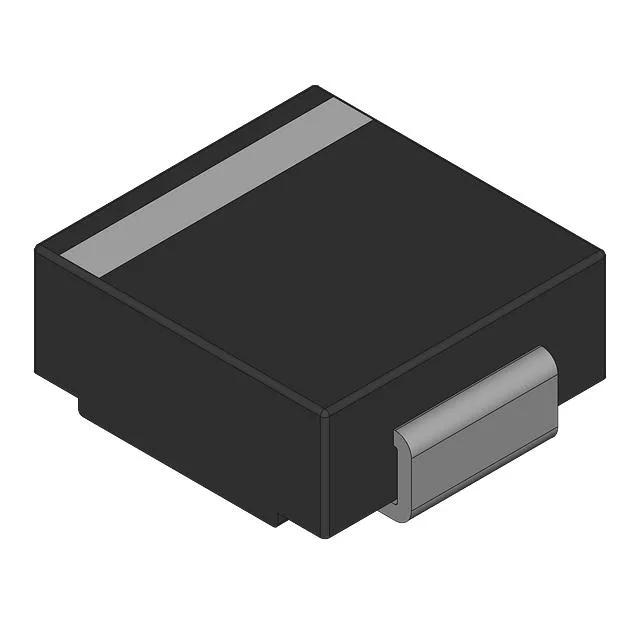
The 1.5SMCJ40A_R1_00001: The 40 V reverse standoff is where the TVS sits idle in normal operation — the line must stay below this before the device does anything. That 64.5 V clamping ceiling is the number the downstream circuitry must survive — it defines the protection margin.
This is fundamentally different from the fast 8/20 µs ESD pulse that human-body and system-level ESD standards specify. If the actual threat in the application is fast transients (USB, HDMI, GPIO lines), a 1.5 kW device at this waveform class may not have the response time needed — check the clamping curve in the Panjit datasheet against the actual event shape and energy budget.
DO-214AB SMC — board-level rework and deployment note
The DO-214AB (SMC) package is the workhorse of the 1.5–3 kW TVS class — the wide metal terminal pads on each end make reflow and hand-solder rework straightforward, and the cathode bar is clearly marked so there is no ambiguity on orientation. The wide 150°C maximum junction temperature gives headroom for clamping events that momentarily push the die temperature up — the limiting factor for long-duration events is the board-level thermal impedance from junction to ambient, not the die rating itself. Thermal pads under the device and adequate copper area on the board side of the termination directly affect the clamping voltage the device reaches under repeated surge events.