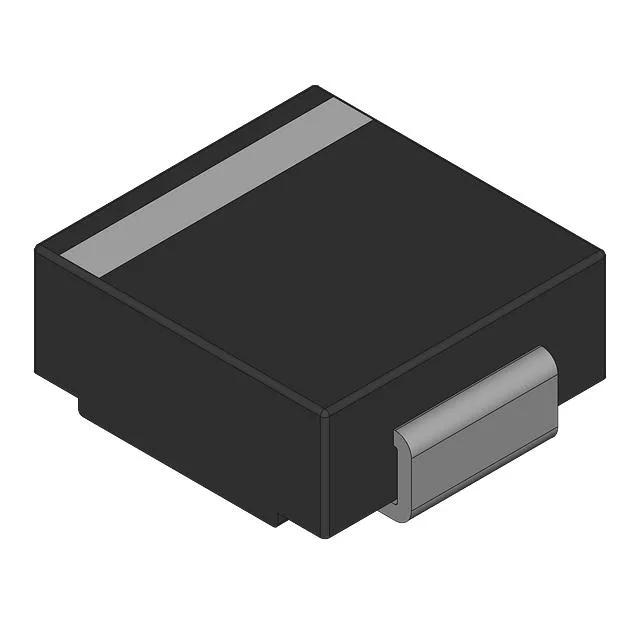
The 1.5SMCJ36A_R1_00001: It clamps a 36 V working rail at a maximum of 58.1 V with a peak pulse current of 25.8 A, which means it absorbs the surge energy and limits what the downstream circuit sees to a survivable overvoltage spike rather than an open-circuit event.
Standoff voltage sets the protection rail ceiling
The 36 V reverse standoff is the maximum DC working voltage the TVS can sit across without conducting — transients above this level trigger the clamping action. The 40 V minimum breakdown voltage gives a small headroom margin above the standoff, so the device does not activate on normal rail noise.
Wide junction temperature range in a standard SMC footprint
This temperature grade is broader than many general-purpose TVS parts in the same package, which gives margin in thermally variable enclosures. The SMC (DO-214AB) package is the standard surface-mount footprint for 1.5–3 kW TVS parts — the exposed die-attach pad on the cathode side handles the thermal path to the PCB. Layout rules for this package are well-established; the anode-to-cathode polarity is marked by the cathode band on the part body.
General-purpose circuit protection — where TVS parts fit
TVS diodes in this class protect sensitive electronics from voltage transients on power rails, signal lines, and communication buses. The 36 V standoff rating suits 24 V and 28 V industrial control rails, 12 V automotive nodes, and similar medium-voltage rails where the clamping voltage must stay below the protected IC abs-max rating. General-purpose classification means no specific industry-standard qualification (AEC-Q101, MIL-PRF-19500) is claimed on this part — it is aimed at industrial and commercial electronics rather than automotive or defense programs.