What the protection ratings mean
The 1.5SMCJ30CA-AU_R1_000A1: That 48.4V ceiling is what the downstream circuitry must survive — it is the clamping performance spec that drives downstream component selection. The 10 µs rise time matches automotive load-dump profiles; a faster transient (8/20 µs) will share the same clamping voltage but draw a higher peak current — the 31A figure is the governing limit.
Automotive grade and thermal margin
AEC-Q101 qualification means the die and package have passed the automotive stress suite — temperature cycling, humidity bias, and mechanical shock per the AEC standard. For under-hood modules this is the baseline; a non-AEC part on the same BOM line carries different liability exposure. Junction temperature rating of -55°C to 150°C gives substantial headroom against the 125°C ambient limit typical in engine-bay layouts. At 150°C junction limit, the thermal derating curve narrows quickly — the clamping energy absorbed during a fault event adds joules on top of quiescent dissipation, so verify the actual transient duty cycle against the derating curve in the Panjit datasheet before committing to a fully loaded design.
Package and sourcing posture
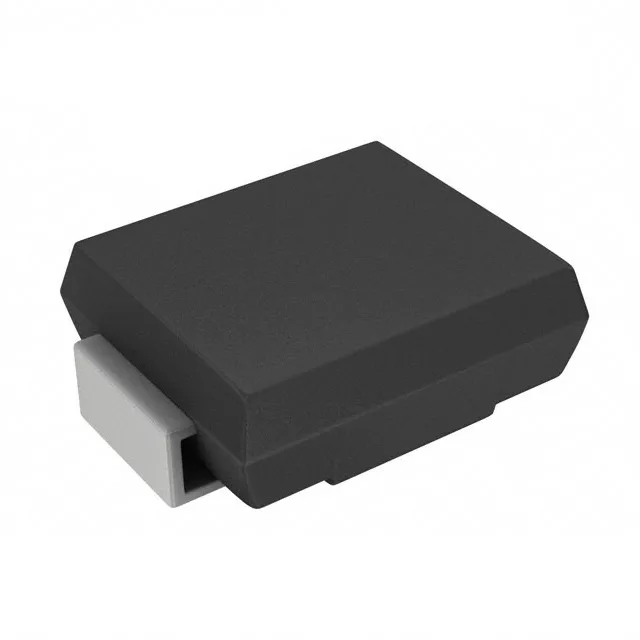
DO-214AB (SMC) is the standard unidirectional/bidirectional TVS footprint — land pattern is consistent across Littelfuse, Vishay, and onsemi families in this voltage/power class. Lifecycle is listed Active with no announced successor. For automotive BOMs under long-running platform programs, a single-source Zener TVS warrants a second-source qualifier — confirm the standoff voltage, clamping voltage, and peak pulse rating match across any alternative before substituting.