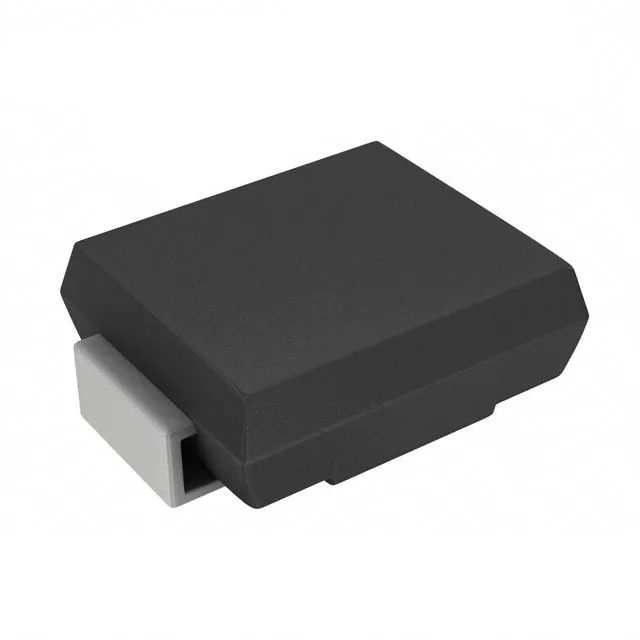
The 1.5SMCJ28CA-AU_R1_000A1: Once triggered, the clamping voltage ceiling of 45.4 V at 33 A peak pulse current is what the downstream circuitry must withstand; this is the selection decision the buyer is actually making.
Standoff, breakdown, and clamping — the three numbers that define fit
Minimum breakdown of 31.1 V sits above the 28 V standoff, giving the TVS a defined guard band — the device does not activate during normal line transients but guarantees turn-on before the clamped level is reached. Bidirectional (1 channel) means it clamps both polarities — no need to stack two unidirectional parts for a symmetrical bus; a single device covers the full AC or reversing-polarity DC rail.
Automotive grade — AEC-Q101 in an engine-compartment temperature band
Junction temperature rated to 150 °C — the upper bound sits well above the under-hood ambient ceiling, so a 105 °C module ambient leaves 45 °C of thermal margin before the junction limit is approached; derating curves in the Panjit datasheet quantify the remaining headroom for the design engineer.
DO-214AB SMC — surface-mount protection on a standard footprint
The SMC package is the dominant industry footprint for 1.5–3 kW TVS diodes — the land pattern is shared across multiple manufacturers, which is the key second-source consideration for a buyer managing single-source risk on a BOM line. Available in tape-and-reel and cut-tape packaging — the tape width and reel diameter are standard for this body size, but the exact lead-free / RoHS status should be confirmed at RFQ since automotive-grade tin-finish parts may carry different plating options than commercial equivalents.