What the 1.5SMCJ24CA-AU_R1_000A1 does
The bidirectional channel count of 1 means it clamps a single supply line in one polarity, so it is suited for 12V and 24V nominal rails where the dominant transient is a positive spike on the line. Reverse standoff of 24V sets the working voltage — the TVS stays reverse-biased and off the clamp at normal rail conditions. Once a surge exceeds the breakdown threshold of 26.7V minimum, the device avalanche-conductors and clamps the peak pulse to 38.9V maximum, limiting what reaches the downstream IC. This figure tells you the part survives a single-event surge of that amplitude without degrading. The 1500W rating is the peak pulse power dissipation the package can handle during the clamp event.
Automotive grade — what AEC-Q101 means for the BOM
The AEC-Q101 qualification is the automotive stress-test screen for discrete semiconductors — it certifies the part passed temperature cycling, humidity bias, and surge-life testing at grades meaningful for engine-compartment and body-control environments. For a TVS diode protecting an ECU input, this is the baseline qualification most automotive OEMs require before approving the BOM. The upper limit is the junction rating — the SMC body thermal resistance to ambient determines whether the 150°C ceiling is reachable in a given enclosure.
Package and board-level fit
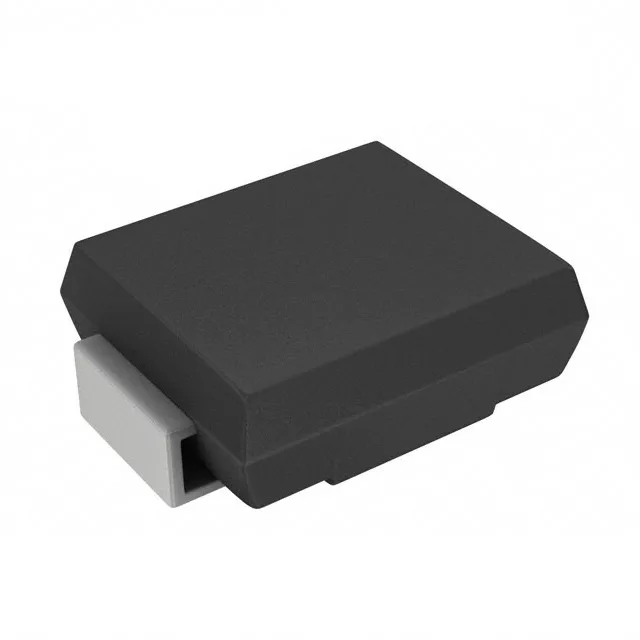
The supplier device package designation matches the industry-standard SMC, so the land pattern follows the JEDEC MO-214 land pattern — any SMC-footprint TVS or Schottky from any brand drops in without a board spin. Surface-mount termination means it reflow-solders in a standard SMT paste-and-reflow profile — the flat top surface tolerates a hot-air rework cycle if the board needs rework, provided the adjacent components are shielded from the preheat zone. Tape-and-reel and cut-tape packaging options cover both high-volume SMT placement and low-volume prototyping.