What 1500W peak pulse power means for surge protection
The 1.5SMCJ210AS_R1_00001: That distinction matters: the clamping voltage the diode reaches under a real-world surge depends on how much of the 1500W budget the event draws. If the peak current stays below 4.4A, the clamp holds near the 340V ceiling; exceed that current and the diode enters a higher-resistance region, letting the voltage climb above the spec sheet's headline number. The 210V typical reverse standoff sets the working voltage — the node sits below this with only leakage current flowing. The 231V minimum breakdown is where the Zener junction begins conducting in reverse bias, establishing the protection threshold. The window between 210V and 231V is the margin the designer exploits: the circuit runs below standoff in normal operation and above breakdown only during a fault transient.
Why the 10/1000µs surge waveform matters for board-level protection
The 4.4A peak pulse current is defined under the same 10/1000µs test condition as the 1500W power rating — a slower transient than the sub-1µs pulses an ESD event delivers. Under faster transients the diode's dynamic resistance is higher, so the actual clamping voltage sits above the datasheet figure. If the protected node faces USB, HDMI, or antenna-port ESD rather than ac mains disturbances, a 340V maximum clamp rating is the steady-state ceiling, not the instantaneous ESD peak — budget additional margin or add a downstream TVS stage.
DO-214AB (SMC) package and thermal integration
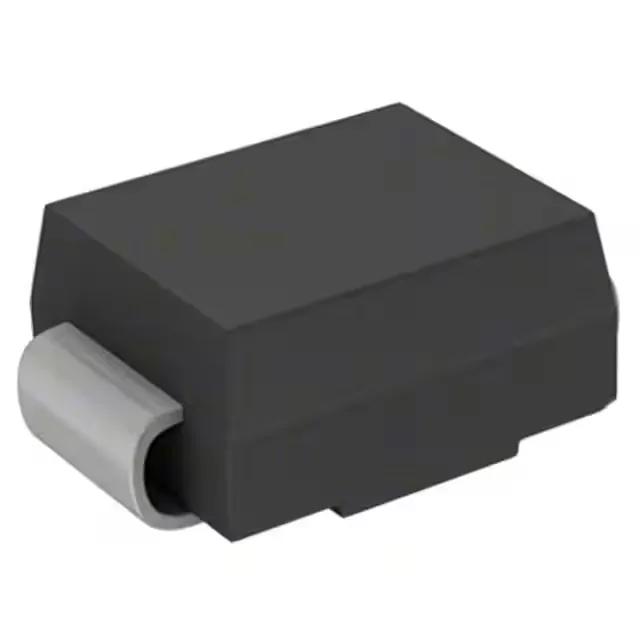
The DO-214AB (SMC) package is the standard industry footprint for 1500W TVS diodes — multiple manufacturers use this outline, which means the land pattern and solder joint geometry transfer directly if a cross-source is later evaluated. Pin 1 is the cathode (protected side), pin 3 is the anode (ground reference) per the conventional industry marking; verify the polarity marking on the Panjit unit before committing to assembly orientation. The General Purpose classification signals this is not a safety-grade or automotive-qualified part — it belongs in a standard commercial or industrial board protection role, not in a functional-safety or AEC-Q-qualified system.