What the 190V standoff rating means for the protected rail
The 1.5SMCJ190CA_R1_00001 is a unidirectional Zener-based transient voltage suppressor — the 190V reverse standoff rating is the working voltage the protected rail can sit at continuously without the TVS conducting. The minimum breakdown of 209V is where the device begins to clamp, and the clamping ceiling at peak pulse current is 308V — that 98V window between standoff and clamping is the protection headroom the downstream circuit sees during a transient event.
Peak pulse power is rated at 1500 W using the 10/1000µs waveform — a slow rise, long duration event typical of inductive load dump or power supply surge. The corresponding peak pulse current is 4.8A at that waveform. This is not the same as an 8/20µs lightning-surge rating; a fast-sharp spike delivers the same energy at lower current, so the 4.8A figure is specific to this waveform and should not be applied to estimate performance under a different transient shape.
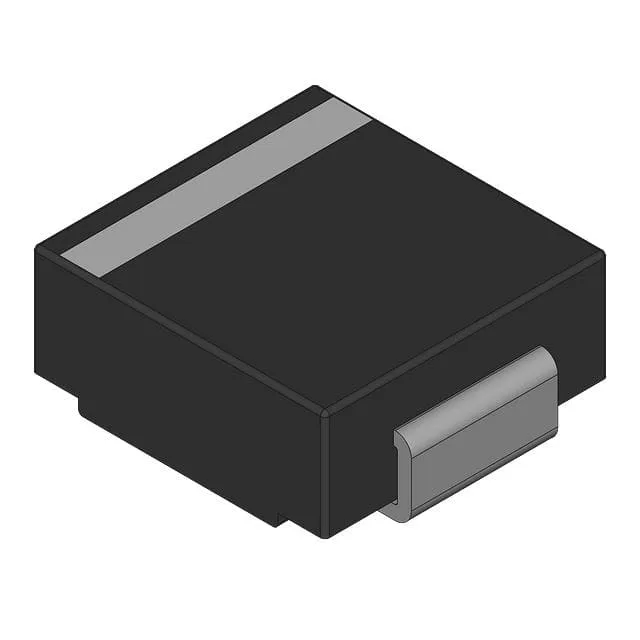
DO-214AB SMC package and thermal margin
The SMC (DO-214AB) package is the standard surface-mount footprint for 1.5–3kW TVS diodes. The Tj rating of 150°C gives good headroom for transient self-heating — a 1.5kW pulse at ambient 85°C still leaves margin before the junction approaches the limit. Solder the cathode bar to the PCB pad with adequate thermal land; the SMC tab is the primary heatsinking path for repetitive-pulse duty. The single bidirectional channel means this part protects one polarity — for AC signal lines or bipolar rails a second device or a bidirectional variant would be required. Note this part is listed as not rated for power line protection, so it is intended for signal or low-power rail transient suppression, not AC mains clamping.