Peak pulse and clamping ratings
The 1.5SMCJ18A-AU_R1_000A1: This means the device absorbs a 1.5 kJ transient energy event within a 10 ms envelope without clamping, then recovers before the next pulse window at 1000 µs. The rated peak pulse current is 51.4 A at the clamping voltage of 29.2 V, so a 24 V rail seeing a surge clamps within 29.2 V — the protected downstream IC sees this ceiling, not the raw surge. Reverse standoff voltage is 18 V typical — the maximum working voltage at which the TVS presents high impedance in the forward or reverse-bias quiescent state. A 12 V automotive rail runs well below this standoff with margin; a 24 V nominal rail may require the next step-up in standoff rating depending on transient specification. Minimum breakdown voltage is 20 V, providing the triggering threshold below which the TVS does not conduct. The gap between the 18 V standoff and the 20 V minimum breakdown is intentional design headroom — the device idles off until a transient pushes it into avalanche breakdown at 20 V and above.
AEC-Q101 automotive qualification and thermal margin
This is the entry-level requirement for any active semiconductor entering under-hood, chassis, or cabin automotive domains. Junction temperature rating is -55°C to 150°C, with the minimum breakdown specified at 25°C and the power dissipation derated to zero at 150°C junction. The 1.5 kW peak pulse rating is a non-repetitive peak — the device is not intended for continuous dissipation. Sustained operation above 125°C junction demands thermal relief at the board level.
SMC package and board integration
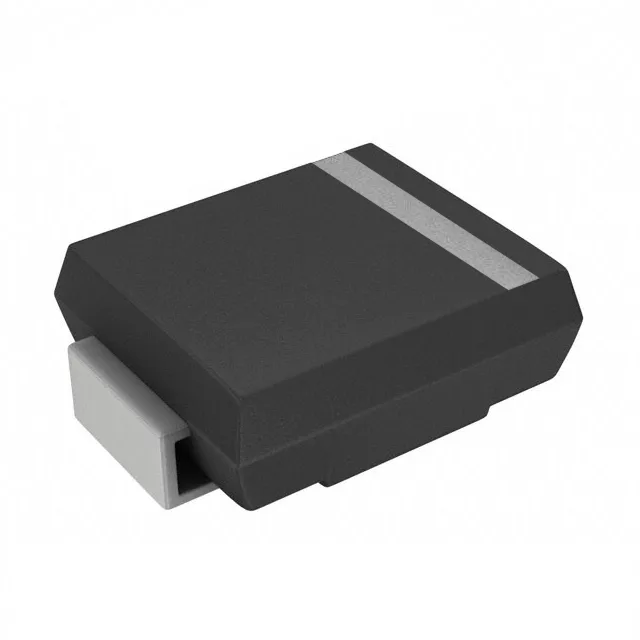
The DO-214AB (SMC) package is the mid-size surface-mount TVS package. The cathode band marks the polarity on the unidirectional channel — a single polarity direction only. The metal tab at the top of the body is the cathode; the lead frame pad soldered to the PCB is the anode reference. Supplied on Tape & Reel and cut tape. The reel quantity and reel diameter are per the standard SMC carrier tape pitch — confirm reel pitch against the pick-and-place feeder specification before committing to high-volume assembly. AEC-Q101 screening does not change the package footprint; it changes the incoming inspection and lot traceability requirements.