What the standoff and clamping ratings mean
The 1.5SMCJ180A_R1_00001: The minimum breakdown of 198V sits above standoff, so there is no creep between the two in the typical case — the margin is tight, which is normal for a tight-hold TVS. When a 10/1000 µs surge does arrive, the clamping voltage maxes at 292V, which defines the stress the protected downstream circuitry sees. The peak pulse current rating of 5.1 A at that waveform sets the surge energy the part can absorb before it clips — 1500W peak pulse dissipation is the headline figure, but the buyer sizing the clamp actually works backward from the protected load's transient immunity ceiling to the 292V clamping limit, not forward from the 1500W figure.
Package and where it sits on the board
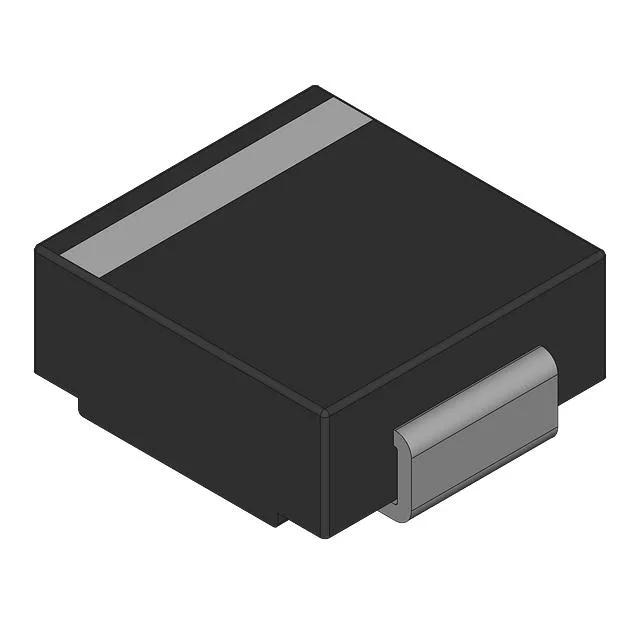
DO-214AB (SMC) is the standard JEDEC footprint for the 1.5SMCJ series — the cathodes bar and the body geometry are shared across the full line, so pad layout transfers directly if swapping within the series. Unidirectional only — one direction of protection, no bidirectional variant implied by this order code. If the protected line needs symmetrical clamping, a different polarity or a bidirectional part is required, not a wiring workaround.
Listed as Active by Panjit International Inc. The 1.5SMCJ series is a widely cloned family — multiple second-source manufacturers carry pin-compatible equivalents in the same SMC package, which matters if the BOM is looking for a sourcing hedge on this line.