The clamping stack — what the voltage ratings mean for protection design
The 1.5SMCJ160CA_R1_00001: The 160V reverse standoff voltage defines the working range where the device stays off and presents only leakage — the protected rail runs below this without loading the TVS. The 10/1000µs waveform notation tells you the test shape — a 10µs front and 1000µs tail — which is the IEC 61000-4-5 characterisation wave for AC-line and DC-rail protection. The 1500W peak pulse power rating is the device's energy-absorption ceiling for that waveform; exceeding it in a sustained or repetitive surge environment pushes the junction toward the 150°C limit faster than the SMC package can shed heat.
Temperature and package for industrial panel deployment
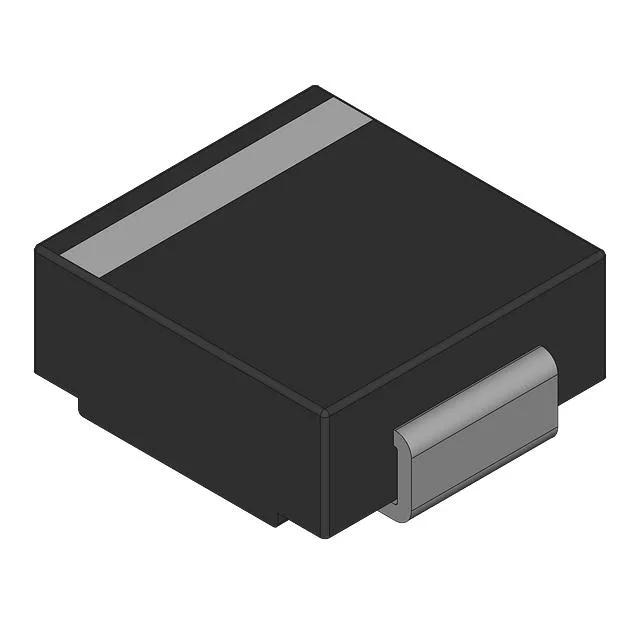
The SMC (DO-214AB) package thermal resistance is low enough for single-device protection on a 24V or 48V rail, but a multi-point protection scheme across a bus will need thermal consideration if surges are repetitive rather than singular. Surface-mount termination suits reflow assembly; the SMC body sits on a recommended land pattern with thermal pads tied to the copper plane. No power-line protection flag means this part is positioned for signal-line or local rail clamping rather than being the primary line-to-line suppressor on an AC input stage.
Panjit lists production status as Active with no published successor or NRND notice on this specific order code.