TVS clamping and standoff — what the downstream circuit actually survives
The 1.5SMCJ10CA_R1_00001: The 1500W peak pulse rating defines the surge energy this diode can absorb without failing — it is the primary selection gate for a TVS on any power or signal rail. The standoff voltage is the maximum working voltage the protected rail can sit at continuously without the TVS conducting — this sets the upper limit for the normal operating condition of the circuit it guards. At 17V clamping voltage with a peak pulse current of 88.2A, the protected side sees no more than 17V during a transient event — that gap between the 10V standoff and the 17V clamp is what the downstream IC actually survives, so the clamping ratio is a direct measure of how hard the protected load is stressed during a surge.
Temperature margin and package footprint for board-level protection
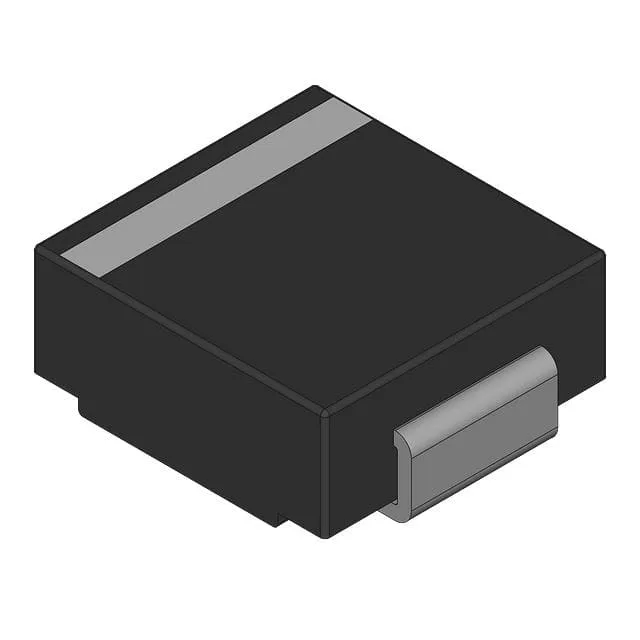
The DO-214AB (SMC) package is the de facto industry standard for 1.5kW TVS parts across multiple manufacturers — pin-compatible with equivalent parts from other brands in the same series, which matters when single-sourcing a BOM line is a risk. Bidirectional polarity means this part clamps both polarities — it suits AC rails or any node that swings above and below ground, not just DC positive rail protection.
Active production and BOM sourcing posture
Classified as general purpose — no AEC-Q automotive qualification is listed, so for automotive ECU or safety-circuit designs this part requires qualification confirmation before commit.