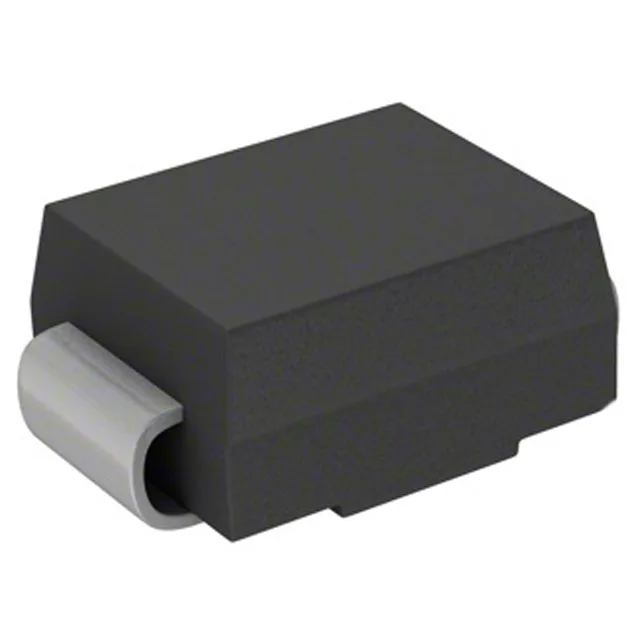
The 1.5SMC62CA-AU_R1_000A1: The reverse standoff of 53V is the maximum voltage the TVS will respect during normal circuit operation — above it the device begins to conduct and clamp. The breakdown minimum of 58.9V sets the onset threshold, so the clamping window between 58.9V and the 85V clamping maximum at 17.7A defines the transient energy the part will divert before the protected node overshoits further. At 17.7A peak pulse (10/1000 µs wave shape), the diode dissipates the full 1.5 kW peak pulse rating — this wave shape matters, because a shorter-duration higher-current surge at the same energy will pull the clamping voltage higher in the I-V curve, so the 85V spec is tied to this exact pulse width. Bidirectional clamping means the part handles both polarities — it is protecting a node that can swing above and below ground, which is common in automotive load-dump events where the supply rail overshoots positively and then rings negative as the inductance in the harness collapses. The CA suffix confirms the bidirectional polarity configuration in the 1.5SMC series. The automotive grade and AEC-Q101 qualification set the screening and qualification bar above a standard commercial TVS — this is the part that goes into powertrain and chassis-domain designs, not cabin electronics.
DO-214AB SMC — surface-mount package in automotive panels
Power line protection is listed as No — this part is a point-of-load TVS protecting a single node or circuit branch, not a bus-level protector. The 1.5 kW rating reflects the individual surge-handling capability per device, not a system-level hold-coff energy rating.
Where automotive TVS diodes sit in a protection scheme
Circuit Protection Zener-class TVS diodes like this one are deployed downstream of the main bulk capacitance on a supply rail — they absorb high-energy transients that the input filter cannot attenuate. The 53V standoff is suited for 12V nominal automotive rails where load-dump spikes can push the supply 40–60 V above nominal for milliseconds; a 62V standoff part (the "62" in the part number) sits near the upper end of the common 12V protection window. It is also used to protect 24V industrial and commercial vehicle nodes.