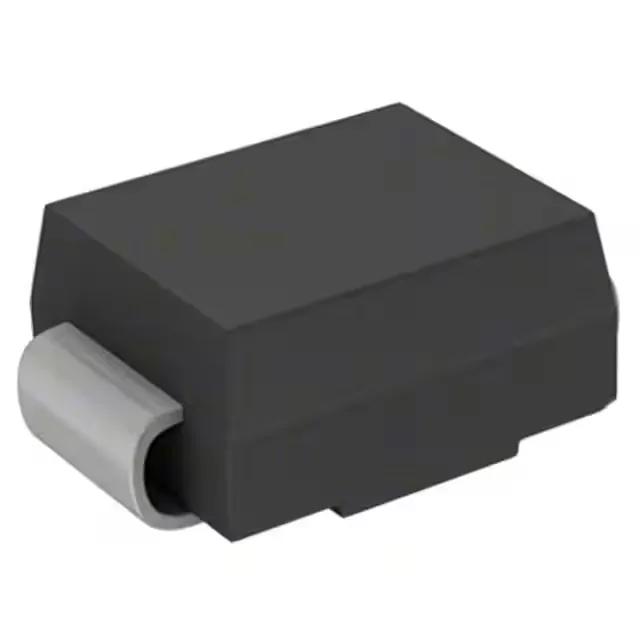
What the 1.5SMC56CA is — and what it protects
The 1.5SMC56CA_R1_00001 is a unidirectional TVS (transient voltage suppressor) diode built on a Zener mechanism, packaged in the DO-214AB (SMC) surface-mount outline. It clamps voltage spikes on a single polarity rail, shunting surge current away from downstream circuitry.
What the clamping spec means on the bench
At 19.5A peak pulse current the clamping ceiling is 77V maximum — meaning the protected node cannot see more than 77V even when the surge tries to push the line higher. For a 48V rail this gives nearly 30V of headroom above the normal working voltage, which is the typical design target for telecom and industrial 48V input stages. The bidirectional channel count of 1 confirms unidirectional polarity — it protects the positive rail; the negative rail needs a separate diode or a bidirectional (CA vs CA) part in the same series if symmetric protection is required. Continuous dissipation is governed by the thermal resistance of the package to the board, not by this peak number. Board designers need to run a separate thermal analysis using the TJ(max) = 150°C limit against their actual board pad geometry and ambient.
Temperature grade and deployment environment
TJ rated -55°C to 150°C — this is the extended industrial/jGrade temperature band. The upper limit applies at the junction, so the board-level ambient derating must keep the package temperature well below 150°C under worst-case surge and ambient conditions. For outdoor enclosure or factory-floor installations without active cooling, the 150°C TJ ceiling gives reasonable margin above the -40°C floor of commercial equipment. Surface-mount DO-214AB SMC footprint — the standard EIA-468 land pattern applies. Solder joint reliability under thermal cycling is governed by the board pad design and the thermal expansion match between the package and the board substrate, not by the TVS itself. No IP sealing is specified — the SMC is an open package intended for a sealed enclosure, not direct environmental exposure without conformal coat or housing.