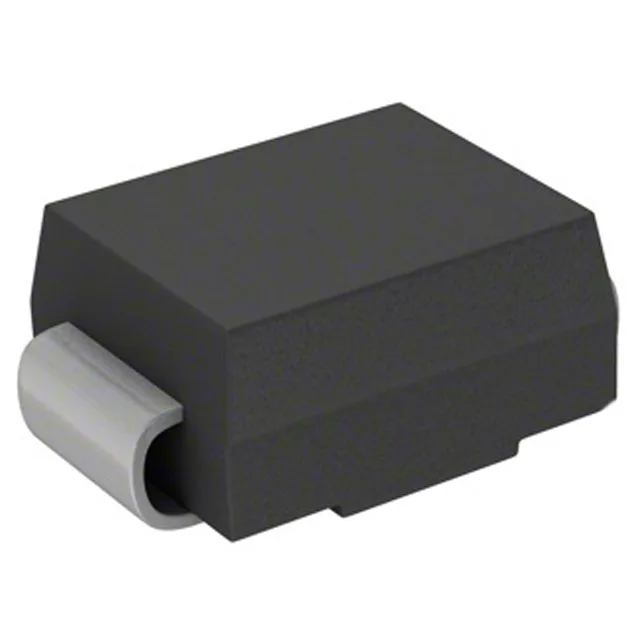
Surge protection for 12V rails
The 1.5SMC15A_R1_00001: It is designed to clamp transients on 12V DC power buses, signal lines, and general-purpose protection circuits where a single surge event could damage downstream silicon. When a transient exceeds the 14.3V minimum breakdown threshold, the TVS avalanches and clamps the voltage to 21.2V maximum at the 71A peak pulse current rating — holding the protected node below the abs-max of most 12V-rated ICs.
What the ratings mean for the BOM
For shorter transients, the power capability increases; for longer or repetitive surges, derating applies. This rating tells the design engineer whether the TVS can survive the expected surge profile from a lightning-induced transient or inductive load dump. The 71A peak pulse current at the 10/1000µs waveform is the actual surge current the diode diverts to ground. The clamping voltage of 21.2V at this current defines the voltage the protected circuit sees — a 12V-rated input stage with a 30V abs-max survives this clamp with margin. The unidirectional configuration (single channel) means it protects one polarity; for AC or bidirectional lines, two devices or a bidirectional TVS would be needed. The DO-214AB (SMC) surface-mount package is the standard footprint for this power class — the large copper tab on the bottom side conducts heat to the PCB pad, so the board layout's copper area directly affects the derated power at elevated temperatures.