Transient suppression for 12 V rails
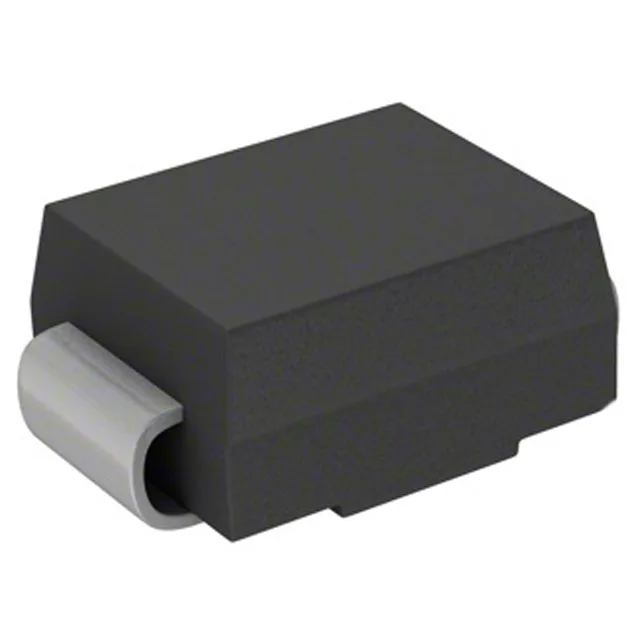
The 1.5SMC12CA_R1_00001: With a 10.2 V reverse standoff voltage, it sits across a 12 V rail and stays transparent during normal operation; the breakdown starts at 11.4 V min, and the clamping voltage peaks at 16.7 V at the rated 90 A peak pulse current. The DO-214AB (SMC) surface-mount package handles the 1500 W pulse without cracking the epoxy — the copper leadframe dissipates the heat into the PCB copper pour, so the board layout's thermal pad area directly sets the derating at elevated ambient temperatures.
Bidirectional clamping for signal and power lines
A single bidirectional channel means the same device clamps positive and negative transients symmetrically — useful on AC-coupled signal lines or on DC power buses where reverse-polarity events are possible. The operating junction temperature range spans -55°C to +150°C, covering the full industrial and automotive under-hood ambient envelope — the 1500 W rating is derated above 25°C per the datasheet curve, but the 150°C Tj max gives headroom for high-temperature board spots near motors or exhaust. No power-line protection feature is built in — the device is a plain TVS diode without integrated filtering or overcurrent elements; the board designer adds those externally as needed.