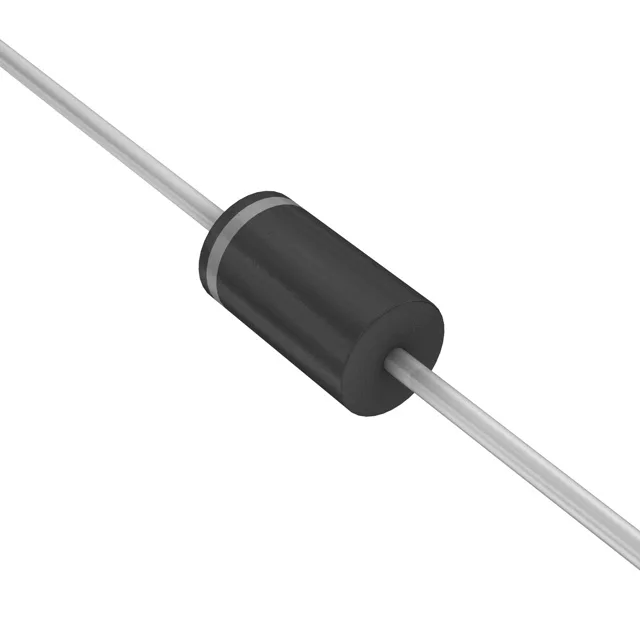
The 1.5KE9.1A_R2_00001: This is a general-purpose protection diode — not rated for power-line use (power line protection: No), so it belongs on signal lines, DC power buses, or low-voltage supply rails inside equipment.
Temperature range and operating envelope
The junction temperature range spans -65°C to 175°C — wide enough for industrial enclosures, outdoor telecom cabinets, or automotive underhood environments where ambient heat soaks the board. The 1500W peak pulse rating assumes the device starts within this range; derate above 25°C per the standard power-temperature curve for axial-lead TVS diodes. With a single unidirectional channel, this part protects one rail per device. If your board needs bidirectional clamping or multiple lines, you stack two back-to-back or use a different series. The 112A peak pulse current at the 10/1000µs test waveform gives a practical surge-handling figure for estimating let-through energy into the downstream circuit.
Obsolete — sourcing through independent channels
Panjit has marked the 1.5KE9.1A_R2_00001 as obsolete. No official successor order code is recorded in the lifecycle data. This means the part is no longer manufactured and is not available through standard authorized distribution channels.