What the 1500W rating means for your protection design
The 1.5KE56A_R2_00001: For a 48V nominal rail, the 47.8V reverse standoff voltage means the diode stays off during normal operation, then clamps at 77V maximum when a transient hits, shunting up to 19.5A away from the protected load.
Obsolete — sourcing through independent channels
Panjit has marked this part as Obsolete, meaning the manufacturer no longer produces it. No official successor or second-source part number is recorded in the lifecycle data. For a BOM line that depends on this TVS, qualifying a functionally equivalent alternative from the same 1.5KE family (same package, similar breakdown voltage) is the prudent hedge — but no pin-compatible drop-in is guaranteed without a board-level review.
Package and temperature range
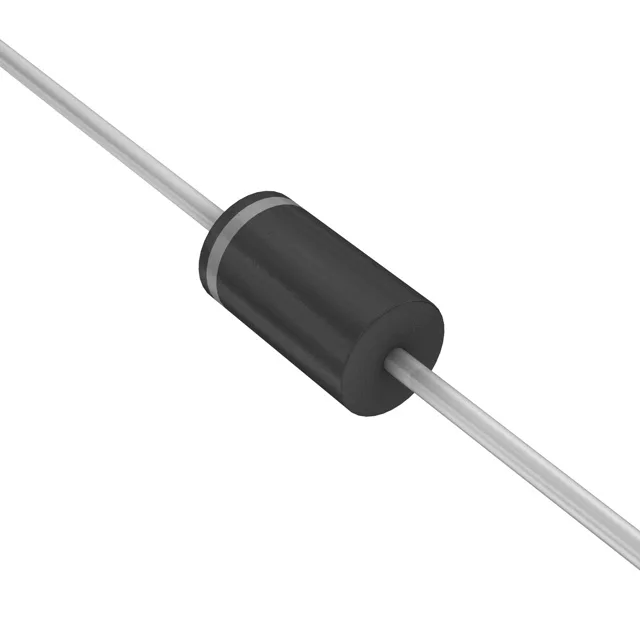
Housed in a DO-201AE axial-lead package, this TVS is through-hole mounted — the lead bend and body length match the standard DO-201 footprint, so a replacement from another manufacturer in the same package should fit the existing PCB holes. The operating junction temperature range spans -65°C to 175°C, covering industrial and some automotive under-hood environments where the ambient may spike above 125°C.