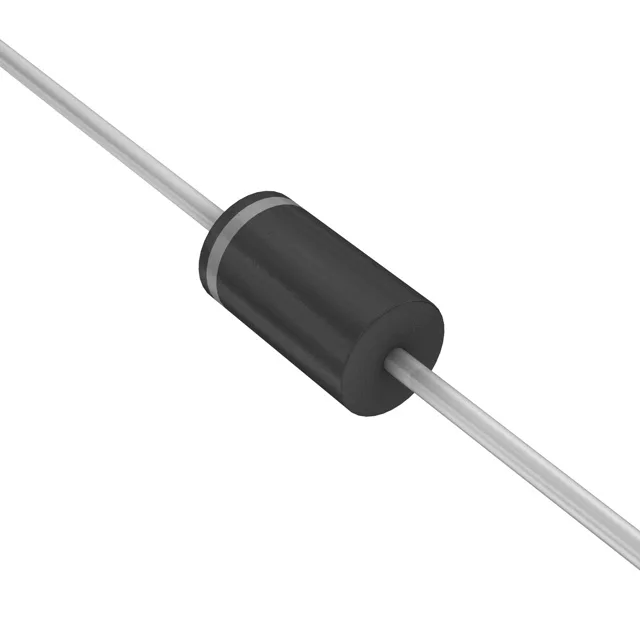
What the ratings mean on the bench
The 1.5KE18A_R2_00001: When a transient hits, the diode clamps at 25.2V max — that is the voltage the downstream circuitry sees, not the 15.3V standoff it normally sits at. The 59.5A peak pulse current rating tells you how much fault current it can shunt without self-destructing. The breakdown voltage starts at 17.1V minimum — below that the diode is effectively open, above it starts conducting.
Panjit has marked this part obsolete. That means the only path to fill a BOM line is through independent surplus or broker channels — the part is no longer manufactured in volume. The DO-201AE axial package is a common footprint, so a pin-compatible replacement from another manufacturer (same standoff and clamp voltages) is the usual fix. But there is no factory-authorized cross-reference — the buyer or engineer must verify the replacement's Ipp and clamping match the original spec.
Where it fits in a circuit
This is a unidirectional TVS (one channel) — it protects a single rail against positive transients above 15.3V. The 1500W pulse rating suits it for secondary-side protection in power supplies, industrial control inputs, or telecom line cards where the energy is moderate but the transient is fast. The through-hole DO-201AE package is larger than modern SMD TVS diodes, but it handles higher surge energy and is easier to hand-replace on a board. For a repair bench, the axial leads mean it can be soldered in without a hot-air station.