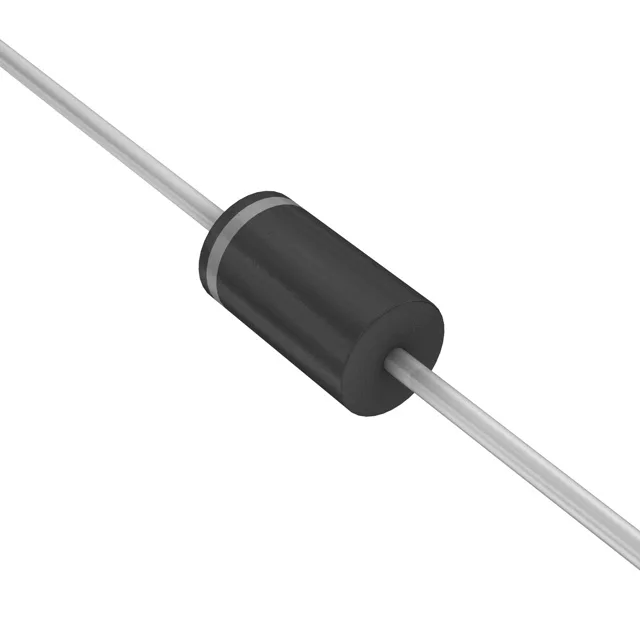
What the 1500W rating buys you in a TVS
The 1.5KE16CA_R2_00001: That 1500W figure means it can clamp a 67 A transient current pulse to 22.5 V maximum, protecting downstream silicon from overvoltage events like inductive load dumps or lightning-coupled surges on a 13.6 V nominal rail.
Voltage thresholds and what they mean for rail selection
The reverse standoff voltage is 13.6 V — the rail voltage the diode leaves alone during normal operation. Breakdown starts at 15.2 V minimum, and the clamping voltage peaks at 22.5 V when the full 67 A pulse hits. For a 12 V nominal bus with a 13.6 V tolerance ceiling, this part sits right at the edge of the operating envelope; a 12 V rail that sags to 14 V under load won't trigger it, but a 15 V spike will start conduction before the protected circuitry sees 23 V.
Panjit has marked the 1.5KE16CA_R2_00001 as obsolete. No official successor order code is recorded. For a production line or a repair stockroom holding this part on the BOM, the supply path runs through independent surplus and broker channels — sealed reels with consistent date codes are the target, not mixed-date auction lots.
Package and mounting — the DO-201AE axial footprint
Through-hole mounting in a DO-201AE axial package. The lead spacing and body diameter match the standard DO-201AE footprint — a 1.0 mm diameter hole on a 9.5 mm pitch is typical. The 175 °C maximum junction temperature gives margin for the self-heating from repetitive pulses, but the 1500W rating assumes a single non-repetitive 10/1000 µs pulse at 25 °C lead temperature; derate for elevated ambient or repetitive events per the thermal impedance curve.