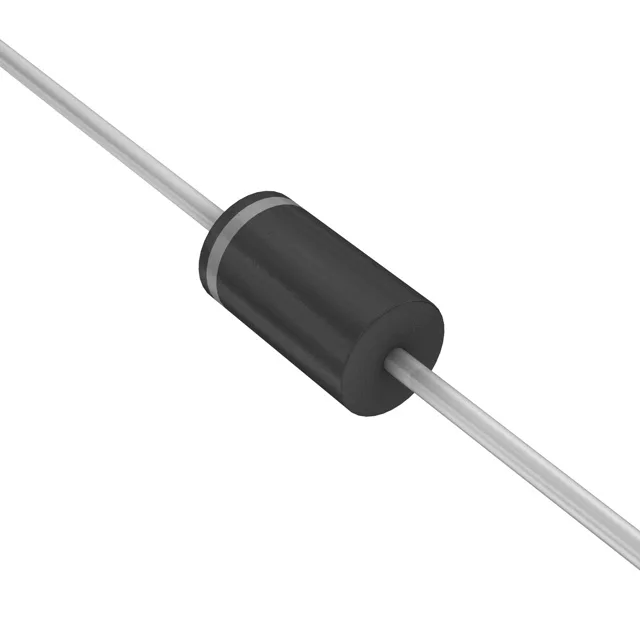
1500 W bidirectional transient suppressor — obsolete, sourced to order
The 1.5KE110CA_R2_00001: It clamps transients at 152 V maximum, with a 94 V reverse standoff voltage and a 105 V minimum breakdown threshold.
Clamping voltage and pulse current — what the ratings mean for fit
For a 94 V nominal rail, the clamp margin is 58 V — enough headroom that a downstream 100 V-rated DC-DC converter survives a surge without avalanche breakdown. The bidirectional configuration (single channel) means the device clamps equally in both polarities, making it suitable for AC signal lines or DC rails where reverse polarity transients are possible. The 1500 W peak pulse rating at the 10/1000 µs waveform is the standard telecom surge rating — derate for shorter or longer pulse widths per the manufacturer's pulse derating curve. The DO-201AE axial package with through-hole mounting suits point-to-point wiring on terminal blocks or PCB layouts where surface-mount TVS diodes are not preferred for thermal or mechanical reasons.
Obsolete — sourcing reality for existing BOMs
Panjit has marked the 1.5KE110CA_R2_00001 as obsolete. For existing designs already qualified to this part, the only supply path is through independent surplus and broker channels. New designs should migrate to an active, functionally equivalent bidirectional TVS in the same package footprint. When sourcing this part for a BOM line, confirm the date code range and lot traceability with the supplier at RFQ. The DO-201AE package is a standard JEDEC outline, so a pin-compatible replacement from another manufacturer (e.g., a 1.5KE110CA from Littelfuse or Vishay) may be a viable second source — verify the clamping voltage and peak pulse current match the design's surge requirement.