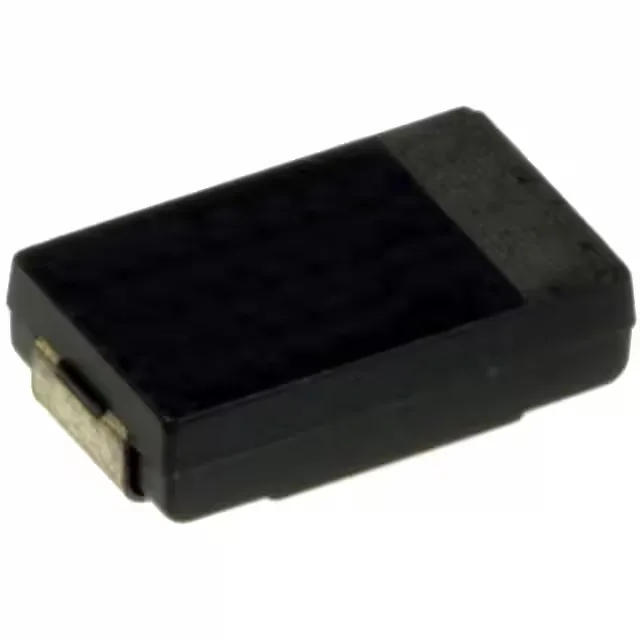
330 µF at 4 V in the 7343 polymer SMD footprint
The EEF-CX0G331R: The SP-Cap CX series uses a solid polymer electrolyte rather than a liquid one — the key difference for the board designer is that ESR stays low and stable across temperature and frequency, without the drying-out failure mode that limits liquid electrolytic lifetime in high-ambient applications. In a 5 V bus running at 100–300 kHz switching, this ripple rating sets the headroom above the actual AC current the cap sees. ESR is 15 mΩ — solid polymer construction achieves this without the large case sizes a liquid electrolytic would need to match it. The combination of low ESR and 5.1 A ripple rating means the SP-Cap handles high-frequency switching noise where a ceramic or film cap would need to be impractically large.
Thermal endurance and the 2000-hour lifetime at 105 °C
The 2000-hour rating at 105 °C is the industry-standard endurance test condition for aluminum polymer caps — it does not mean the cap fails at 2000 hours, but that it is qualified to hold within spec at that condition. A cap running at 85 °C ambient in a closed enclosure will last significantly longer than one at 105 °C. The operating window spans -55 °C to 105 °C — the low end covers cold-start and outdoor/cold-chain environments, while 105 °C addresses the upper end of enclosed industrial and telecom equipment where ambient inside the chassis runs hot.
Active sourcing posture — what the procurement buyer needs to know
Listed as Active by Panasonic Electronic Components — this is a current-production part in an established series, not a legacy or NRND line. The SP-Cap CX family is a standard Digi-Key/Mouser line, which means multi-distributor availability is normal rather than a special condition. The Tape & Reel and Cut Tape packaging options cover both production-reel assembly and loose-quantity requirements.