TIP127G
onsemi
TRANS PNP DARL 100V 5A TO220
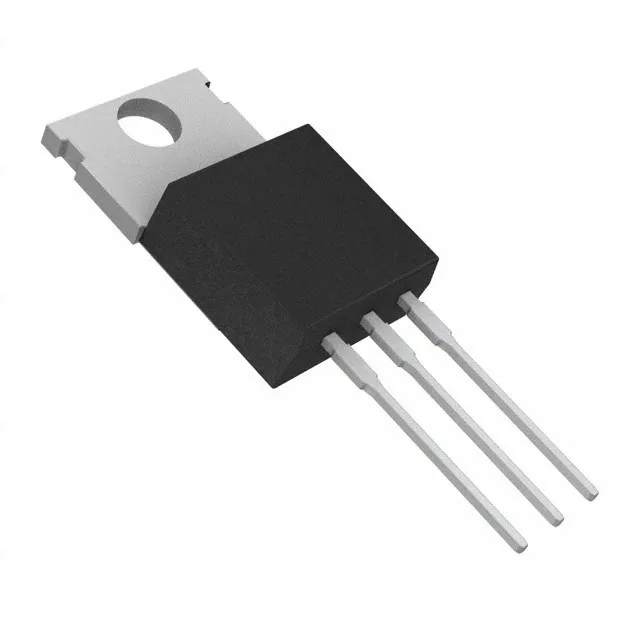
MOQ 1 · Tube · RoHS · EIA-481 · DAP/DDP · T/T
Technical specifications
| Parameter / Attribute | Specification / Value |
|---|---|
| Mounting | Through Hole |
| FET type | PNP - Darlington |
| Voltage - collector emitter breakdown | 100 V |
| Current - collector (Ic) | 5 A |
| Current - collector cutoff | 500µA |
| DC current gain (hFE) (Min) @ ic, vce | 1000 @ 3A, 3V |
| Power - max | 2 W |
| Operating temperature | -65°C ~ 150°C (TJ) |
| Package | Tube |
| Case | TO-220-3 |
| Vce saturation (Max) @ ib, ic | 4V @ 20mA, 5A |
Need Stock or a Drop-in Second-Source for TIP127G?
Package: TO-220AB · Pin-compatible replacements with immediate Shenzhen spot stock
The TIP122 is the relay, solenoid and lamp driver of two generations of industrial boards - a TO-220 Darlington with a gain over 1000, so a few milliamps of base current switch amps of load. The family is a voltage ladder (TIP120 at 60V, TIP121 at 80V, TIP122 at 100V; the PNP halves are TIP125/126/127), and the buying decisions are two: which voltage grade the rail actually needs, and whether the position should become a MOSFET. The characteristic Darlington price is a saturation voltage of about 2V - at 5A that is 10W inside the package - which is exactly why so many of these positions get converted.
Verified Pin-Compatible Replacements (4 verified alternatives)
One Voltage Grade Down, Same Die Family
Shenzhen Spot Stock (24-48h Dispatch)
The 80V member of the same family: identical 5A / 65W ratings, hFE over 1000 at 3A, VCE(sat) 2V max at 3A - only the collector-emitter ceiling drops.
VCEO 80V against 100V on the TIP122; everything else is shared.
The 60V Entry Grade
Shenzhen Spot Stock (24-48h Dispatch)
The 60V original of the ladder - the part many older 12V and 24V designs actually specified.
VCEO 60V; same 5A / 65W body ratings.
The PNP Half of the Pair
Shenzhen Spot Stock (24-48h Dispatch)
The complementary PNP: -100V / -5A with the same Darlington gain and saturation characteristics, used opposite the TIP122 in push-pull and high-side drive stages.
VCEO -100V; TIP125 (60V) and TIP126 (80V) are the lower grades.
The 10A Big Brother
Shenzhen Spot Stock (24-48h Dispatch)
The higher-current member of the Darlington line: 100V / 10A class in a larger outline (the PNP complement is the TIP147).
Same 100V class as the TIP122 with roughly double the current handling.
Buyer & Quality Checklist for Sourcing Alternatives
- Darlington drive arithmetic: two base-emitter junctions means VBE(on) up to about 2.5V, so 3.3V logic leaves little headroom through a base resistor - size the resistor for the load (order of 10mA of base current for a 5A load at hFE 1000 minimum) and verify at cold temperature.
- VCE(sat) about 2V at 3A is the Darlington tax: at 5A that is roughly 10W in the package before any margin. If the position is switching-heavy, a logic-level MOSFET usually runs cooler - but that is a circuit change (gate resistor, pull-down, drive voltage), not a plug swap.
- No freewheel diode is inside - the inductive-kick diode across relay coils and solenoids is mandatory and its absence is the most common reason this part dies in the field.
- The metal tab is the collector and it sits at the load potential: insulator kit when bolting to a grounded chassis.
- Read the grade digits deliberately: 120 / 60V, 121 / 80V, 122 / 100V (and TIP125/126/127 for the PNP halves). Bodies are identical - only the print says which one you are holding.
- In complementary stages replace both halves from one lot; gain matching across the Darlington pair matters in linear duty where both devices conduct.
Frequently Asked Technical Questions
Q: What is the difference between TIP120, TIP121 and TIP122?
A: Voltage grade only: 60V, 80V and 100V respectively, with identical 5A / 65W ratings and the same TO-220 pinout. Higher grade substitutes down safely in low-voltage circuits; substitute downward only with the real rail and transient peaks checked.
Q: Can a MOSFET replace a TIP122?
A: Functionally in most low-side switching positions, but it is a circuit change: the Darlington is current-driven through a base resistor, a MOSFET is voltage-driven with a gate resistor and pull-down. Done properly the board runs cooler (no 2V saturation drop); done as a plug swap it may not switch cleanly.
Q: Is TIP127 the PNP version of TIP122?
A: Yes - the -100V / -5A complementary partner with the same Darlington behavior, used opposite the TIP122 in push-pull and reversible-drive stages. Note the family step: NPN grades are TIP120/121/122 while the PNP equivalents are TIP125/126/127.