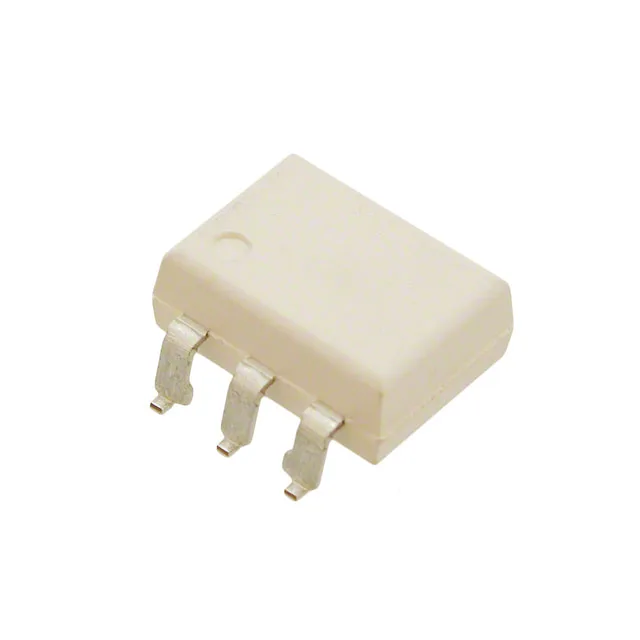
onsemi MOC3083SVM — Optoisolators

onsemi MOC3083SVM Optoisolator, Triac Output, 800 V

MPNMOC3083SVM
Active

onsemi MOC3083SVM optoisolator, triac output, 1 channel, 800 V off-state, 4170 Vrms isolation, zero-crossing circuit, 6-SMD gull wing, tube.

$1.2800Ref. price · indicative, final on quote
Packaging6-SMD, Gull Wing
RoHSROHS3 Compliant
Independent supplier — new & surplus stockAuthenticity-screened · ESD-safe packingListing updated Aug 2026

Specifications

MOC3083SVM specifications
ParameterValue
Output typeTriac
MountingSurface Mount
Voltage - isolation4170Vrms
Voltage - off state800 V
Voltage - forward (Vf)1.3V
Current - hold500µA (Typ)
Current - DC forward (If)60 mA
Current - LED trigger (Ift)5mA
Operating temperature-40°C ~ 85°C
Approval agencyIEC/EN/DIN, UL
PackageTube
Case6-SMD, Gull Wing
Channels1
Static dV (dt)600V/µs
Zero crossing circuitYes

Product details

Triac output with zero-crossing for clean AC switching

The onsemi MOC3083SVM is a single-channel optoisolator with a triac output rated for 800 V off-state and 4170 Vrms isolation. The zero-crossing circuit fires the internal triac near the AC voltage zero, which limits the inrush current when switching resistive or lightly inductive loads like solenoids, heaters, or lamp banks.

600 V/µs dV/dt immunity for noisy line environments

A minimum static dV/dt of 600 V/µs means the output triac will not falsely trigger from line transients or commutating noise on the AC mains. This matters when the opto drives a triac or SCR gate in a motor controller or industrial heater — the high dV/dt immunity keeps the load off until the LED side commands it. The LED trigger current is 5 mA max, with a typical forward voltage of 1.3 V. The hold current is 500 µA typical, so the output stays latched through the AC half-cycle once fired.

The device is approved under IEC/EN/DIN and UL standards, which covers the safety barrier certification for most commercial and light-industrial equipment.

Frequently asked questions

What is the MOC3083SVM used for?

It is an optoisolator with a triac output and zero-crossing circuit, designed to switch AC loads up to 800 V off-state through a galvanic isolation barrier of 4170 Vrms. Typical applications include solid-state relays, AC motor starters, lamp drivers, and solenoid valves where the control side (microcontroller or logic) must be isolated from the mains side.

Will the MOC3083SVM drop into a board designed for the MOC3011SM?

Both parts share the same 6-SMD gull-wing package and 4170 Vrms isolation, but the MOC3083SVM includes a zero-crossing circuit while the MOC3011SM does not. The pinout is the same, so a board laid out for the MOC3011SM will accept the MOC3083SVM electrically and mechanically. The zero-crossing behaviour changes the turn-on timing — the MOC3083SVM only fires near the AC zero crossing, which eliminates inrush but adds a half-cycle delay versus the non-zero-cross part.