Zero-crossing triac driver for clean AC switching
The onsemi MOC3083SM is a 1-channel optoisolator with a triac output and a built-in zero-crossing circuit, meaning it only triggers the triac when the AC mains voltage is near zero. This reduces inrush current and electromagnetic interference when switching resistive or inductive loads like heaters, solenoids, or small motors. Rated for 800 V off-state voltage and 4170 Vrms isolation, it provides a solid safety barrier between low-voltage control logic and high-voltage AC lines up to 240 Vrms nominal.
The 600 V/µs minimum static dV/dt rating means the triac will not falsely trigger from fast voltage transients on the AC line — important for noisy environments like motor drives or switching power supplies where commutation spikes are common. Hold current is 500 µA typical — once triggered, the triac stays on until the load current drops below this threshold, which happens naturally at the AC zero crossing. The zero-crossing circuit ensures the triac only fires near the zero point, not at the peak of the waveform.
Package and board-fit for surface-mount assembly
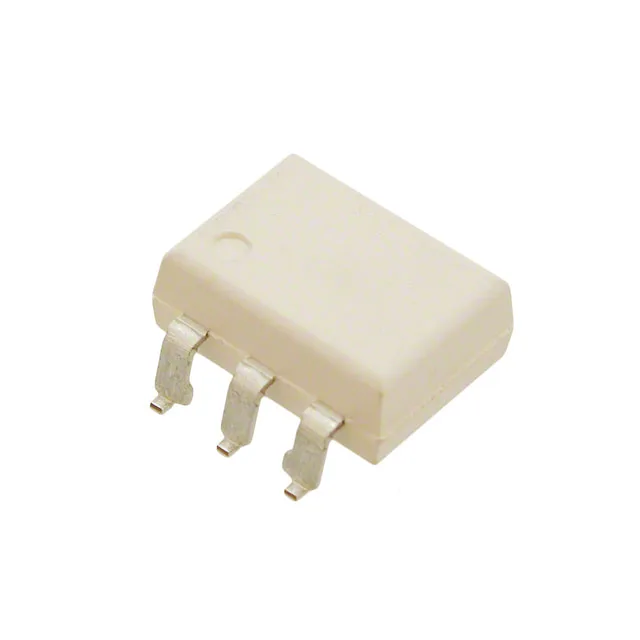
Housed in a 6-SMD Gull Wing package (6-SMD), the MOC3083SM is designed for reflow soldering on standard FR-4 PCBs. The Gull Wing leads are hand-solderable with a fine-tip iron if you are prototyping, though a hot-air station is cleaner for production runs. It ships in tubes (Tube), so for pick-and-place you will need to transfer to tape-and-reel or order a tape-compatible variant.