Triac-output isolation for AC load control
The onsemi MOC3082SR2VM is a single-channel optoisolator with a Triac output, designed to switch AC loads from a low-voltage control side while maintaining galvanic isolation. With 4170Vrms isolation voltage and 800V off-state blocking capability, it isolates microcontroller or logic-level circuits from 120VAC to 277VAC mains lines. The built-in zero-crossing circuit triggers the Triac near the AC voltage zero-crossing point, which reduces inrush current into resistive or lightly inductive loads and lowers conducted EMI — a practical advantage for heating elements, lamps, or solenoid valves where soft turn-on matters.
Noise immunity and drive requirements
A minimum static dV/dt of 600V/µs means the output Triac will not falsely trigger from fast-rising mains transients or commutating noise — critical when switching inductive loads where the voltage slew at turn-off can reach several hundred volts per microsecond. The LED trigger current is 10mA maximum (typical lower), so a standard 5V or 3.3V GPIO can drive it through a series resistor without a separate transistor stage. The forward voltage is 1.3V typical at that current, and the absolute maximum DC forward current is 60mA, leaving headroom for derating at elevated temperature. Once triggered, the Triac holds conduction until the load current drops below the 500µA typical hold current — this is relevant for very low-power loads that might extinguish the Triac before the AC cycle completes.
Package, approvals, and temperature range
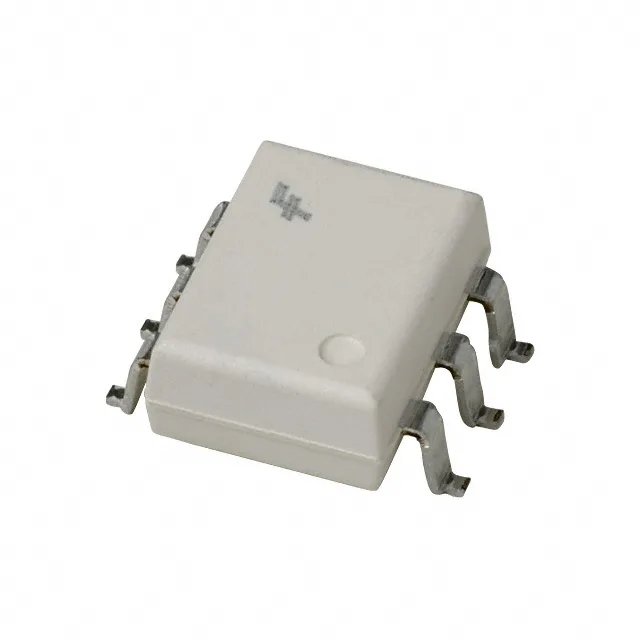
Housed in a 6-SMD Gull Wing package (supplier device package 6-SMD), the MOC3082SR2VM is suited for reflow soldering and automated pick-and-place assembly. Safety approvals from UL and IEC/EN/DIN confirm the 4170Vrms isolation rating for reinforced insulation requirements in equipment design.