Triac output without zero-crossing — what it means for phase control
The onsemi MOC3053SM is a 1-channel optoisolator with a Triac output, rated for 4170Vrms isolation between the LED input and the output side. The absence of a zero-crossing circuit means the output Triac fires immediately when the LED current exceeds the 6mA max trigger threshold, regardless of the AC line phase angle — this is the right choice for phase-control applications like dimmers or soft-starts where you need to switch on at any point in the cycle, not just near the zero crossing.
600V off-state and 1kV/µs dV/dt — guarding against false triggering
With a 600V off-state voltage rating and a minimum static dV/dt of 1kV/µs, this part handles the voltage transients common on 240VAC or 277VAC lines without commutating falsely. The 1kV/µs figure is the minimum guaranteed — the actual dV/dt immunity is higher, but design to this floor when sizing snubber networks for inductive loads like motors or solenoids. The hold current is 540µA typical — once the Triac fires, it stays latched until the load current drops below this level near the AC zero crossing. In low-current loads (e.g., a small relay or LED driver), verify the load current exceeds Ih over the full temperature range to prevent the Triac from dropping out mid-cycle.
Surface-mount 6-SMD Gull Wing — board-level fit
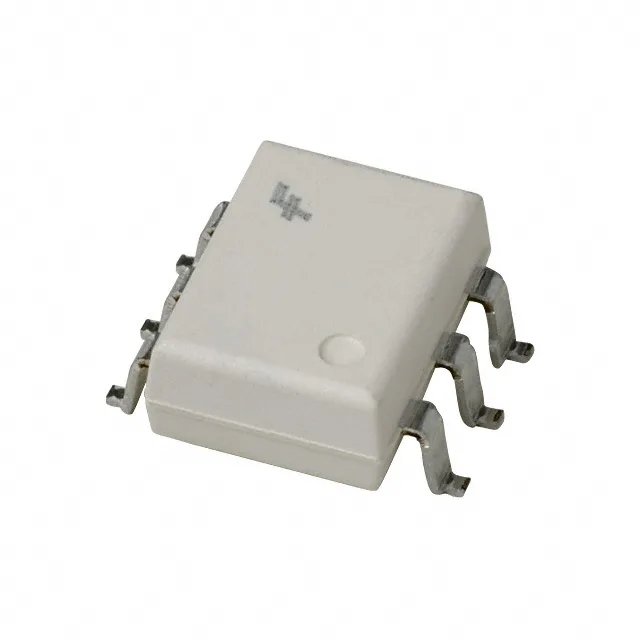
The MOC3053SM comes in a 6-SMD Gull Wing package, with a supplier device package designation of 6-SMD. The Gull Wing leads are suitable for reflow soldering; the package footprint matches standard 6-pin DIP SMD land patterns. The 4170Vrms isolation rating demands a minimum creepage distance on the PCB between the input and output pads — typically 8 mm or more depending on the pollution degree, so route the primary-side and secondary-side traces with adequate clearance.