MOC3052SM

onsemi

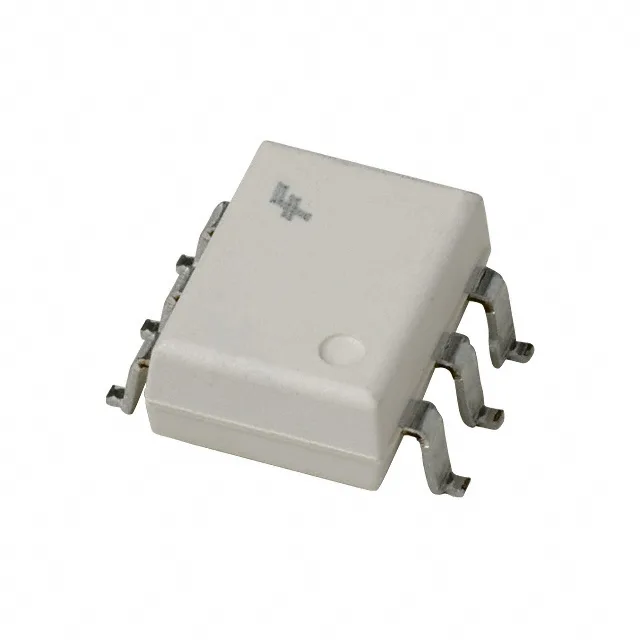
onsemi MOC3052SM optoisolator, Triac output, 1 channel, 4170Vrms isolation, 600 V off-state, 6-SMD Gull Wing, Tube.

onsemi MOC3052SM
Download datasheet (PDF)
[IN STOCK] In Stock: 1 pcs
$2.19/ pc

Volume pricing

Buy Now

MOQ 1 · Tube · RoHS · EIA-481 · DAP/DDP · T/T

Technical specifications

MOC3052SM specifications
Parameter / AttributeSpecification / Value
Output typeTriac
MountingSurface Mount
Voltage - isolation4170Vrms
Voltage - off state600 V
Voltage - forward (Vf)1.18V
Current - hold220µA (Typ)
Current - DC forward (If)60 mA
Current - LED trigger (Ift)10mA
Operating temperature-40°C ~ 85°C
Approval agencyUR
PackageTube
Case6-SMD, Gull Wing
Channels1
Static dV (dt)1kV/µs
Zero crossing circuitNo
100% Footprint Match · Solder-Ready (No PCB Redesign Needed)

Need Stock or a Drop-in Second-Source for MOC3052SM?

Package: DIP-6 · Pin-compatible replacements with immediate Shenzhen spot stock

Footprint Match 98%
Supply Chain & Allocation Reality:

The MOC3021 is the little six-pin bridge between logic and mains in dimmers, speed controls, heater regulators and appliance boards: an LED driving a light-triggered triac, packaged with 7500V isolation. The family divides on two axes buyers conflate at their cost. Phase-control circuits (dimmers, motor speed) need the random-phase parts (MOC302x); on/off switching of resistive loads wants the zero-cross parts (MOC304x) so switching happens near the mains zero to tame inrush and EMI. And within each family, only the LED trigger current differs across the ladder (30 / 15 / 10 / 5mA from 3020 to 3023) - a substitution that ignores the trigger grade fails only on cold boards and marginal drive circuits.

Verified Pin-Compatible Replacements (4 verified alternatives)

MOC3023 onsemi / Lite-On DIP-6
100% Drop-in (Zero Code Change)
Availability & Target Pricing:

Same Function, Tighter Trigger

Shenzhen Spot Stock (24-48h Dispatch)

Electrical & Core Specs:

Random-phase optotriac identical to the MOC3021 but triggering at 5mA LED current instead of 15mA - the sensitive end of the ladder (3020 is 30mA, 3022 is 10mA).

400V peak blocking, the 240V-AC class; 7500V isolation common to the family.

Compatibility & Drop-In Notes: The ladder direction to remember: a more sensitive trigger (3023) substitutes anywhere a 3021 worked, because the circuit was designed to deliver at least 15mA. Going the other way (15mA part where a 5mA grade was specified) asks the driving logic for three times the current it was designed to give - it may pass on the bench and fail cold.
Package & Solder Footprint: DIP-6 standard optotriac pinout, 1:1 with the family.
Shenzhen Warehouse Stock & MOQ: Volume stock; the grade letters documented on the reel label.
MOC3041 onsemi / Lite-On / multiple DIP-6
Functional Equivalent
Availability & Target Pricing:

The Zero-Cross Sibling - Different Job

Shenzhen Spot Stock (24-48h Dispatch)

Electrical & Core Specs:

The zero-cross version: output inhibits until the mains voltage is near zero (5V typical, 20V max), producing full-wave on/off rather than phase control, with a far higher guaranteed dv/dt (1000V/us minimum) for noisy loads.

400V class; grades 3041/3042/3043 across 15/10/5mA trigger currents.

Compatibility & Drop-In Notes: The substitution rule: zero-cross parts do not do phase control - the detector caps the firing angle, so a dimmer fitted with one behaves as a switch that misses low-brightness settings. In the other direction, a random-phase part in an on/off circuit switches at arbitrary points: inrush and EMI come back, and resistive loads with high cold current suffer.
Package & Solder Footprint: Same DIP-6 pinout as the 302x family - the board cannot tell them apart.
Shenzhen Warehouse Stock & MOQ: Stocked as the pair with 302x; label the drawer, not the bag.
MOC3052 Lite-On / Vishay / multiple DIP-6
Functional Equivalent
Availability & Target Pricing:

Random-Phase at 600V

Shenzhen Spot Stock (24-48h Dispatch)

Electrical & Core Specs:

The higher-voltage random-phase member: 600V peak blocking for 380-415V-class lines and noisier mains, with the same phase-control behavior as the 3021.

600V peak against the 400V class of the 302x - the reason it exists.

Compatibility & Drop-In Notes: Match the voltage class to the actual line and transient environment: on 415V three-phase-derived circuits and noisy industrial mains, the 600V part is the honest choice and the 400V one is a countdown.
Package & Solder Footprint: DIP-6 standard pinout.
Shenzhen Warehouse Stock & MOQ: Stocked for industrial phase-control repairs.
MOC3063 onsemi / Lite-On DIP-6
Functional Equivalent
Availability & Target Pricing:

Zero-Cross at 600V

Shenzhen Spot Stock (24-48h Dispatch)

Electrical & Core Specs:

Zero-cross switching at 600V peak and 5mA trigger - the sensitive end of both ladders at once.

600V class for higher-voltage on/off switching.

Compatibility & Drop-In Notes: Same zero-cross rule applies: on/off duty only. Grade and voltage both matter - read both from the orderable number.
Package & Solder Footprint: DIP-6 standard pinout.
Shenzhen Warehouse Stock & MOQ: Stocked with the rest of the 30xx row.
Buyer & Quality Checklist for Sourcing Alternatives
  • Decide the duty before the part number: phase control (dimmers, speed) takes random-phase (MOC302x / MOC3052); on/off switching takes zero-cross (MOC304x / MOC3063). Mixing the duty and the detector is the most common appliance-board repair mistake.
  • Within a family only the trigger current changes: 30mA / 15mA / 10mA / 5mA across the 3020-3023 ladder (and 3041-3043). Substitute toward more sensitivity freely; toward less only with the drive current verified cold.
  • Voltage classes: 250V (301x), 400V (302x / 304x), 600V (3052 / 3063). Mains transients decide the class, not the nominal line voltage.
  • The optotriac drives a power triac - it never carries the load. In field failures, check the power triac and the snubber network before condemning the coupler: it is usually the messenger.
  • dv/dt ratings differ by an order of magnitude between the random-phase and zero-cross families: replacing a zero-cross part with a random-phase one in an inductive-load circuit invites false triggering.
  • Gate resistor sizing is per-grade: the resistor that fed 15mA of LED current wastes efficiency with a 5mA part and starves a 30mA part - match the letter to the circuit.
Frequently Asked Technical Questions

Q: Can MOC3041 replace MOC3021?

A: Functionally it triggers and isolates, but the behavior changes: the 3041 is zero-cross, so phase-control circuits (dimmers) lose their firing-angle control and act as on/off switches. Match the family to the duty first; the pinout will agree either way.

Q: What do the numbers after MOC30 mean?

A: The LED trigger current grade: 3020 is 30mA, 3021 15mA, 3022 10mA, 3023 5mA; the 304x zero-cross series repeats the ladder. More-sensitive grades substitute upward; check drive current before substituting downward.

Q: Why does my dimmer only work at full brightness after a repair?

A: A zero-cross part (MOC304x) was likely fitted where a random-phase part (MOC302x) belonged - the zero-cross detector refuses to trigger at low conduction angles. Match the family letter: 302x for phase control.

Technical details

Triac output with 1 kV/µs dV/dt — no zero-cross

The onsemi MOC3052SM is a 1-channel optoisolator with a Triac output in a 6-SMD Gull Wing package. It provides 4170Vrms of isolation between the LED input and the Triac output, with a 600 V off-state voltage rating. The absence of a zero-crossing circuit means the output triggers immediately when the LED current exceeds the 10 mA maximum Ift threshold, making it suitable for phase-angle control applications where turn-on at any point in the AC cycle is required.

4170Vrms isolation and 600 V blocking

The 4170Vrms isolation rating qualifies the MOC3052SM for reinforced insulation in mains-powered equipment — a solenoid valve driver or solid-state relay input stage on a 230 VAC line stays isolated from the low-voltage logic side. The 600 V off-state voltage blocks the peak of a 400 VAC line, so the Triac holds off until the LED fires it. Static dV/dt is a minimum of 1 kV/µs. This is the rate of rise of off-state voltage the Triac can withstand without false triggering — a commutating snubber may still be needed on inductive loads, but the 1 kV/µs floor covers most contactor and small motor switching without external RC networks. Hold current Ih is 220 µA typical. Once the Triac fires, it latches on until the load current drops below this level near the AC zero-cross. In a 10 mA minimum load circuit the Triac stays latched reliably; below that the output may drop out mid-cycle.

RoHS3 compliant and UL recognized. The UR approval covers the safety isolation rating for North American equipment — a panel builder accepting a UL 508A shop-floor assembly can drop this opto in without a separate component-level investigation.

MOC3052SM
[ALLOC] verified
Quote