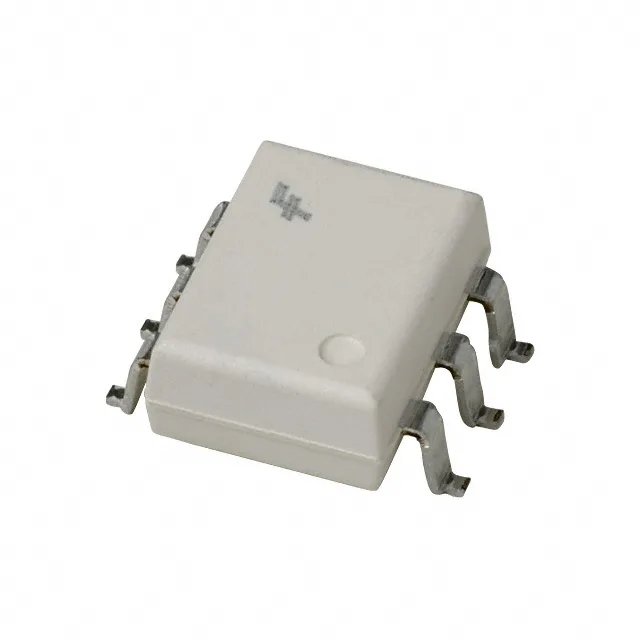
Zero-crossing triac output for clean AC switching
The MOC3041SR2M integrates a zero-crossing detection circuit that gates the internal triac on only when the AC line voltage is near zero, reducing inrush current and radiated EMI when switching resistive or lightly inductive loads like solenoids, relays, and incandescent lamps. Its 400 V off-state voltage rating provides headroom for 240 VAC RMS (340 V peak) plus typical mains transients, making it a common choice for appliance and industrial AC load control. The minimum static dV/dt of 1 kV/µs prevents false triggering from fast voltage spikes on the AC line — a key parameter when the opto drives a triac that sees motor back-EMF or relay coil kickback.
Parametric fit for AC load control
The LED trigger current (Ift) is 15 mA max, and the forward voltage (Vf) is 1.25 V typical, so a 5 V logic output with a 220 Ω series resistor can drive the input side directly. Hold current (Ih) is 400 µA typical — the output triac will commutate off when the load current drops below this threshold near the zero crossing, which is normal for zero-crossing parts. Isolation is rated at 4170 Vrms, sufficient for reinforced insulation in mains-connected equipment per UL requirements.
Active lifecycle and sourcing note
onsemi lists the MOC3041SR2M as Active and ROHS3 compliant. The base product number is MOC304, so date codes and reel quantities follow the MOC304 series standard.
Surface-mount 6-SMD gull wing — the 1.27 mm pitch is compatible with standard SOIC-6 footprints, but the body width is wider (9.65 mm typical for the DIP-6 gull wing variant). Confirm the land pattern against the onsemi package drawing before layout.