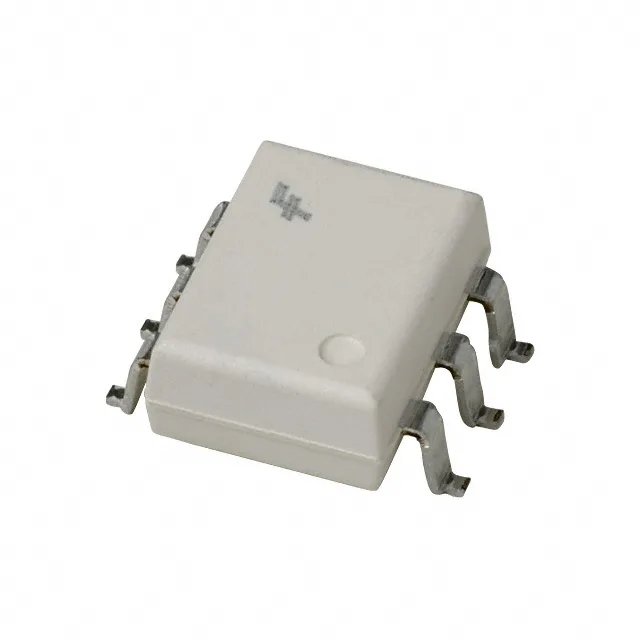
Triac output with zero-crossing for clean AC switching
The MOC3032SR2M from onsemi is a single-channel optoisolator with a Triac output and a built-in zero-crossing circuit. This combination is designed to switch AC loads — such as solenoids, relays, or small motors — while minimizing inrush current and conducted EMI at turn-on. The zero-crossing circuit ensures the Triac only fires when the AC line voltage is near zero, which is critical for driving loads that see a high surge if switched mid-cycle. Rated for off-state voltage up to 250 V, the output stage handles common 120 VAC or 240 VAC line applications without an external snubber in many cases, thanks to a minimum static dV/dt of 1 kV/µs. This dV/dt rating means the Triac resists false triggering from fast voltage transients on the AC line — a real concern when switching inductive loads or operating in noisy industrial environments.
Isolation and drive requirements for the BOM
With 4170 Vrms isolation between input and output, this optoisolator provides a reinforced safety barrier suitable for applications where the control side must be galvanically separated from the line-voltage load. The UL recognition (Approval Agency: UL) confirms the component meets the safety standard for recognized components, which simplifies regulatory acceptance in end equipment. On the input side, the LED requires a forward voltage of 1.25 V (typical) and a maximum trigger current of 10 mA to turn on the Triac. This low trigger current means a standard logic-level output or a simple transistor driver can fire the optoisolator without a separate driver stage. The hold current (Ih) is 400 µA typical — once triggered, the Triac latches on until the load current drops below this threshold, which happens naturally at the AC zero-crossing. This is standard Triac behavior and means the device self-commutates at the end of each half-cycle.
Package, temperature range, and supply format
Housed in a 6-SMD Gull Wing package (Supplier Device Package: 6-SMD), the MOC3032SR2M is designed for surface-mount assembly. The Gull Wing leads provide a visible solder joint for inspection, which is an advantage over J-lead or leadless packages in prototypes or low-volume builds. Lifecycle status is Active, meaning onsemi continues to manufacture this part — no end-of-life notice or last-time-buy window is in effect. ROHS3 compliance is confirmed for RoHS-directed markets.