MJE13003
onsemi
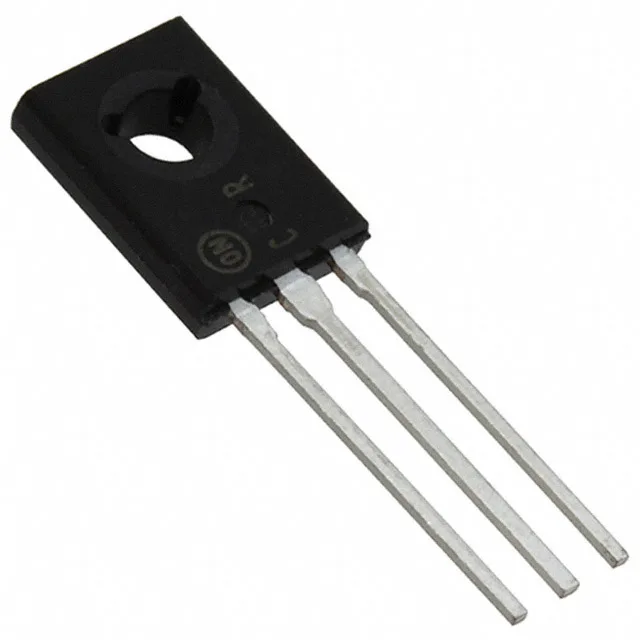
Volume pricing available from 1,000+ pcs per order.
MOQ 1 · Bulk · RoHS · EIA-481 · DAP/DDP · T/T
Technical specifications
| Parameter / Attribute | Specification / Value |
|---|---|
| Series | SWITCHMODE™ |
| Mounting | Through Hole |
| FET type | NPN |
| Voltage - collector emitter breakdown | 400 V |
| Current - collector (Ic) | 1.5 A |
| DC current gain (hFE) (Min) @ ic, vce | 8 @ 500mA, 2V |
| Power - max | 1.4 W |
| Frequency - transition | 10MHz |
| Operating temperature | -65°C ~ 150°C (TJ) |
| Package | Bulk |
| Case | TO-225AA, TO-126-3 |
| Vce saturation (Max) @ ib, ic | 3V @ 500mA, 1.5A |
Need Stock or a Drop-in Second-Source for MJE13003?
Package: TO-126 · Pin-compatible replacements with immediate Shenzhen spot stock
The 13003 is less a part number than an industry specification: the standard high-voltage NPN for offline SMPS, CFL/LED ballasts and small chargers, made in TO-92, TO-126 and TO-220 by dozens of fabs under prefix variations (MJE / KSE / ST / 3DD). Two things decide whether a substitution works: the 700V figure everyone quotes is the collector-base rating while the sustaining collector-emitter rating is 400V, and self-oscillating ballast circuits depend on the switching speed and gain of the specific grade - not just its voltage.
Verified Pin-Compatible Replacements (4 verified alternatives)
Registered Second Source of the Same Spec
Shenzhen Spot Stock (24-48h Dispatch)
The onsemi-registered version of the 13003 switcher: 400V sustaining / 700V collector-base, 1.5A, 40W class in TO-126, B-C-E lead order.
VCEO(sus) 400V; VCBO 700V; IC 1.5A (3A peak); the standard offline switcher envelope.
Second-Registered Source
Shenzhen Spot Stock (24-48h Dispatch)
STs 13003-equivalent high-voltage NPN in the same ratings envelope; check the specific grade letter for the current and hFE window.
VCEO(sus) 400V; VCBO 700V; 1.5A class in TO-126.
The Bigger Brother of the Family
Shenzhen Spot Stock (24-48h Dispatch)
The higher-current TO-220 member of the 1300x switching family (4A class): same 400V / 700V voltage envelope, more die area for drive and dissipation.
VCEO(sus) 400V; IC 4A class; 75W class with heatsinking - verify the exact grade against its datasheet.
Same Family, Higher Power Grades
Shenzhen Spot Stock (24-48h Dispatch)
Another upward step in the 1300x ladder (4A / 60-80W class): for power supplies and ballasts that burned through the smaller grades.
VCEO(sus) 400V family envelope; higher current handling than the 13003.
Buyer & Quality Checklist for Sourcing Alternatives
- Read the two voltages correctly: 700V is the collector-base (VCBO) rating; the sustaining collector-emitter rating (VCEO) is 400V. Circuit stress calculations must use the 400V figure.
- Some CFL/LED ballast designs genuinely require 430V+ sustaining parts. Substituting a marginal 400V grade there is a known cause of repeat failures - check the original grade before ordering a fleet quantity.
- Package determines pinout in this family: TO-126 parts are B-C-E with the collector on the tab; TO-92 variants (common in CFLs) have their own lead arrangement. Match the package, then check the drawing.
- In self-oscillating circuits (many CFLs and cheap chargers), base-drive and storage time matter as much as voltage - keep to the same grade family when repairing, do not trade a low-storage-time part for a generic one.
- The 13003 class is heavily relabeled in the spot market; photograph the lot markings before dispatch and prefer registered second sources (KSE / ST) for fleet repairs.
- The metal tab is the collector: on live-chassis SMPS, the heatsink is often the negative rail - insulator integrity matters more than usual.
Frequently Asked Technical Questions
Q: Is 13003 a 700V transistor?
A: Partly: 700V is the collector-base (VCBO) rating. The sustaining collector-emitter voltage (VCEO) is 400V, and that is the number that matters for offline switching stress. Designs above ~430V need a higher-grade part.
Q: Can I replace a 13003 with a 13005 or 13007?
A: Electrically yes - same family and pin order, with more current and dissipation (TO-220 body). Mechanically it is a different package. In self-oscillating ballast circuits verify the oscillation and base drive on the first unit, since the bigger die switches differently.
Q: Why do 13003 transistors fail in the same ballast repeatedly?
A: Usually the failure is a symptom: a tired electrolytic (the start-up capacitor), an out-of-spec base resistor, or a design that needed a higher voltage grade in the first place. Replacing the transistor without checking the drive network is a known loop.