7500Vpk isolation barrier — where it fits
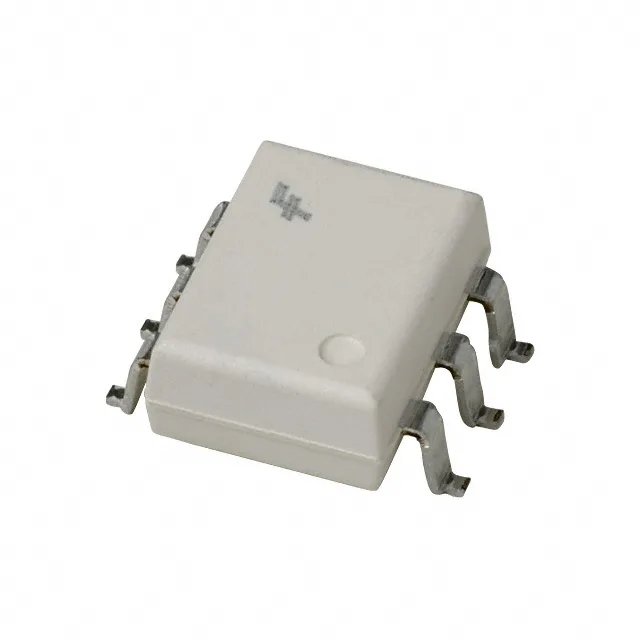
The MCT2ESR2VM from onsemi is a single-channel optocoupler with a transistor-with-base output, rated for 7500Vpk isolation between input and output. That peak isolation voltage qualifies it for reinforced isolation in mains-referenced circuits — think industrial AC line monitoring, motor-drive feedback, or power-supply error amplifiers where the safety barrier must hold off transient surges without breakdown.
CTR and switching speed — the real design constraints
That floor sets the LED drive budget: with 10 mA in, the output transistor can sink at least 2 mA, which is enough to pull a logic input low or drive a low-current relay coil. The 50 mA continuous output current and 30 V output voltage ceiling mean it drives loads, not just signal lines. Rise and fall times are 2 µs and 1.5 µs typical, with turn-on and turn-off both at 2 µs typical. That gives a practical switching ceiling around 100 kHz — fine for 50/60 Hz line sync, zero-cross detection, or slow digital isolation, but not for high-speed data buses like I²C or SPI without careful derating.
Base access — what the third terminal buys you
Unlike a simple phototransistor optocoupler, the MCT2ESR2VM brings out the base of the output transistor as a separate pin. That lets you bias the base for faster switching, configure it as a photodarlington by connecting an external transistor, or add a base-emitter resistor to improve noise immunity. In practice, it gives the circuit designer flexibility the 4N25 family is known for, but in a surface-mount Gull Wing package.