5300 Vrms isolation — the safety barrier spec
The H11A53SD is a single-channel phototransistor optocoupler from onsemi, built to provide galvanic isolation between a DC input and a transistor output. Its headline rating is 5300 Vrms of isolation voltage, which means it can withstand that potential across the input-to-output barrier without breakdown — a figure that qualifies it for reinforced insulation in mains-connected equipment where the safety barrier must hold off transient overvoltages.
30% CTR minimum — the gain floor at 10 mA
Current transfer ratio is the optocoupler's effective gain: at a forward current of 10 mA through the input LED, the output transistor is guaranteed to sink at least 30% of that current (3 mA) with the collector-emitter voltage held at the test condition. This 30% minimum at 10 mA is the design anchor for the pull-up resistor on the output side — if the downstream logic threshold requires 2 mA, the 30% CTR ensures the output can deliver it with margin across the full temperature range.
2 µs switching — speed ceiling for the phototransistor
Typical turn-on and turn-off times are both 2 µs. This sets the practical data-rate ceiling at roughly 250 kHz for a 50% duty-cycle square wave, though the actual limit depends on the load resistor and output capacitance. For applications like PLC digital input isolation or relay driver feedback, this speed is adequate; for high-speed serial isolation, a logic-output optocoupler would be needed.
-55°C to 100°C — industrial temperature grade
The output transistor's Vce saturation maximum of 400 mV and the 30 V maximum output voltage define the load-side operating envelope: the collector-emitter path can switch up to 30 V DC, and the saturation drop at full drive stays under 400 mV, which keeps power dissipation low in the output stage.
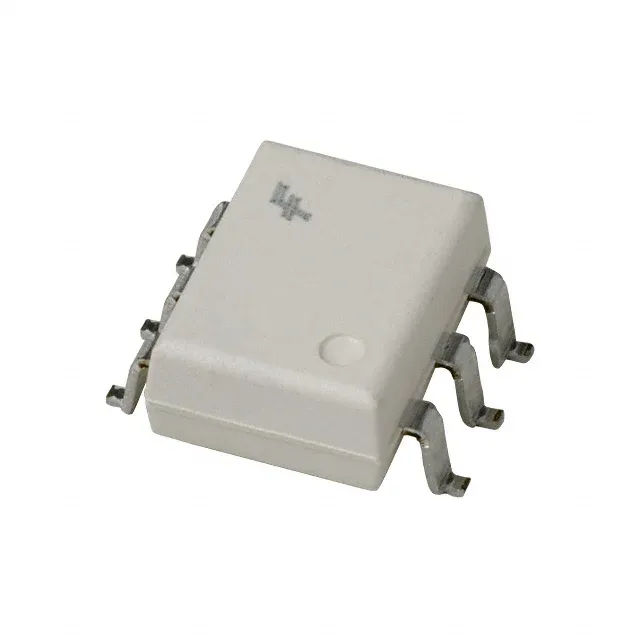
6-SMD Gull Wing — surface-mount assembly
Packaged in a 6-SMD Gull Wing outline (supplier device package 6-SMD), this is a surface-mount optocoupler suited for reflow soldering. The Gull Wing leads provide a visible solder joint for inspection and relieve mechanical stress between the package body and the board during thermal cycling. Supplied on Tape & Reel, it feeds directly into pick-and-place lines.
The H11A53SD is officially obsolete per onsemi's lifecycle status. No successor part number is recorded in the manufacturer's transition documentation. The base product number H11A covers a family of single-channel phototransistor optocouplers; a pin-compatible alternative within that family may exist, but no official cross-reference is held on this record.