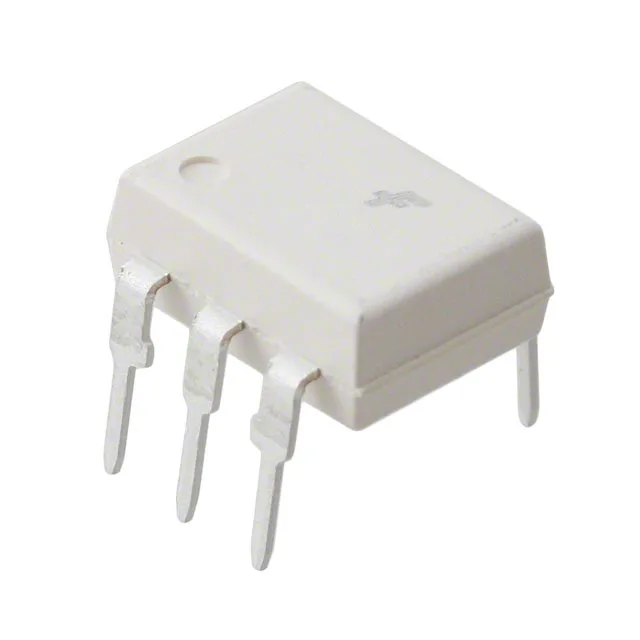
onsemi H11A4VM — Optoisolators

onsemi H11A4VM Optoisolator, 7500Vpk, 6-DIP, Obsolete

MPNH11A4VM
Obsolete

onsemi H11A4VM Optoisolator, DC Input, Transistor with Base Output, 1 Channel, 6-DIP (0.300", 7.62mm), Through Hole, Tube, 7500Vpk Isolation.

Independent supplier — new & surplus stockAuthenticity-screened · ESD-safe packingListing updated Jul 2026

Specifications

H11A4VM specifications
ParameterValue
Input typeDC
Output typeTransistor with Base
MountingThrough Hole
Voltage - isolation7500Vpk
Voltage - output30V
Voltage - forward (Vf)1.18V
Current transfer ratio10% @ 10mA
Current - DC forward (If)60 mA
Operating temperature-40°C ~ 100°C
PackageTube
Case6-DIP (0.300\", 7.62mm)
Channels1
Vce saturation400mV
Turn on (Turn off time)2µs, 2µs

Product details

Barrier rating and transfer parametrics

The onsemi H11A4VM is a single-channel DC-input optocoupler with a transistor-with-base output, housed in a 6-DIP through-hole package. Its headline isolation rating of 7500Vpk defines the voltage stress the barrier withstands between input and output — this is the figure a safety engineer checks against the equipment's working voltage and creepage requirements. Turn-on and turn-off times are both 2 µs typical, giving a switching speed suited to 50/60 Hz line-frequency isolation and general-purpose logic-level translation rather than high-speed data links.

Temperature grade and sourcing reality

Rated for operation from -40°C to 100°C, the H11A4VM covers the industrial temperature band — suitable for motor drive feedback, PLC input isolation, and power-supply monitoring in factory-floor enclosures where ambient stays below the 100°C ceiling.

The maximum DC forward current is 60 mA, and the output transistor is rated for up to 30 V with a saturation voltage of 400 mV maximum.

Frequently asked questions

What is the isolation rating of the H11A4VM?

The H11A4VM is rated for 7500Vpk isolation between input and output. This is a peak test voltage, not a continuous working voltage — the equipment's working voltage and required creepage must be verified against the safety standard applicable to the end product.