Isolation barrier and signal transfer
The onsemi H11A4SD is a single-channel optoisolator providing 5300Vrms galvanic isolation between a DC input LED and a phototransistor output with base access. This isolation rating qualifies it for safety barrier applications where the control side must be electrically separated from the high-voltage or noisy power side — think motor drive feedback, PLC digital inputs, or SMPS secondary-side sensing. With a minimum current transfer ratio of 10% at 10mA forward current, the H11A4SD requires the driving side to deliver at least 10mA to guarantee the output transistor saturates under the specified load. The 400mV Vce saturation maximum means the output drops less than half a volt when fully on — clean logic-level signaling into a 5V or 3.3V receiver without extra level shifting.
Switching speed and temperature range
Typical turn-on and turn-off times are both 2µs, giving a practical switching ceiling around 250 kHz for logic isolation. This is fast enough for isolating PWM signals, serial data at moderate baud rates, or fault feedback loops, but not for high-speed communication links like Ethernet or CAN. The -55°C to 100°C operating temperature range covers industrial control cabinets, outdoor telecom enclosures, and under-hood automotive environments where the optocoupler sits near warm components. The 30V maximum output voltage on the collector-emitter side suits 24V industrial logic rails with margin.
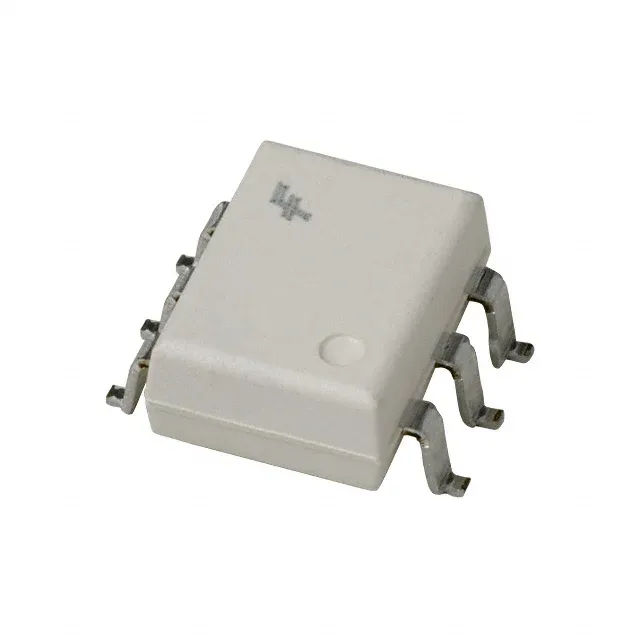
Supplied in a 6-SMD Gull Wing package on Tape & Reel, the H11A4SD is ready for automated surface-mount assembly. The Gull Wing leads provide a visible solder joint for inspection and rework access — no hidden joints under the body. The 1.18V typical forward voltage drop means a 5V supply can drive the LED through a 330-ohm series resistor at 10mA.
The H11A4SD is listed as Obsolete by onsemi. For existing BOM lines, the part is sourced through independent distribution channels — quantities are confirmed per RFQ, and availability is lot-specific. The 6-SMD Gull Wing package and transistor-with-base output are common in the H11A family, so a parametric search across that base number may yield functionally similar devices, but no pin-compatible drop-in is guaranteed from the original manufacturer.