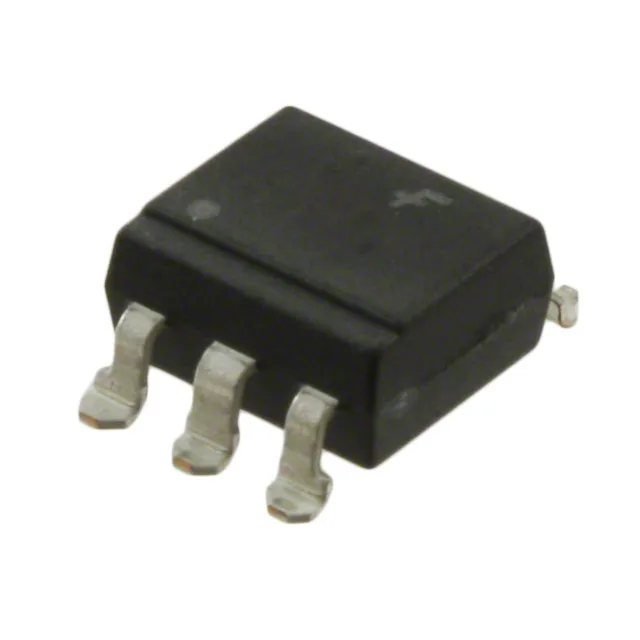
onsemi FOD4208V — Optoisolators

FOD4208V onsemi Optoisolator Triac Output 5000Vrms 6-DIP

MPNFOD4208V
End of Life

onsemi FOD4208V, single-channel optoisolator with triac output, 5000Vrms isolation, 800V off-state voltage, 60µs turn-on time, through-hole 6-DIP package

$4.2Ref. price · indicative, final on quote
Packaging6-DIP (0.300", 7.62mm)
StockContact for availability
MOQ1 pcs
  • 100% new & originalTraceable channels only — no refurbs, no pulls, no remarked parts.
  • Date & lot codes on quoteStated per line before you commit; label photos on request.
  • MSL-compliant ESD packingMoisture-sealed bags with indicator cards; reels photo-verified.
  • PayPal buyer protectionPay by T/T, PayPal or Payoneer — card payments covered end to end.

Specifications

FOD4208V Technical Specifications
ParameterValue
Output typeTriac
Mounting typeThrough Hole
Voltage - isolation5000Vrms
Voltage - off state800 V
Voltage - forward (Vf)1.28V
Current - hold500µA
Current - DC forward (If)30 mA
Current - LED trigger (Ift)2mA
Operating temperature-55°C ~ 100°C
Approval agencycUL, FIMKO, UL, VDE
PackageBulk
Turn on time60µs
Case6-DIP (0.300\", 7.62mm)
Number of channels1
Static dV (dt)10kV/µs
Zero crossing circuitNo

Product details

5000Vrms isolation for line-voltage switching

The FOD4208V is a single-channel optoisolator from onsemi with a triac output, rated for 5000Vrms isolation and 800V off-state voltage. This combination makes it suitable for switching 240V AC loads in industrial motor drives, HVAC contactors, and solid-state relay applications where galvanic isolation between the low-voltage control side and the high-voltage load side is mandatory. With a static dV/dt of 10kV/µs minimum, the output triac resists false turn-on from fast voltage transients — a common failure mode when switching inductive loads such as motors or solenoids. The non-zero-crossing output enables phase-angle control for dimming or soft-start, unlike zero-crossing optotriacs that only trigger at the AC zero point.

Trigger current and thermal margin

The LED trigger current (Ift) is 2mA maximum, which is low enough to be driven directly from a 3.3V or 5V GPIO through a series resistor. Forward voltage is 1.28V typical at If=30mA, so the control-side power budget stays modest even in multi-channel designs. The 500µA hold current means the triac stays latched once triggered until the load current drops below that threshold — relevant for minimum-load scenarios like small fans or LED lamps that might not draw enough current to keep the triac conducting.

Active production, through-hole package

It is in a 6-DIP through-hole package, which is a standard footprint for optoisolators and easy to hand-assemble or wave-solder. The supplier device package is 6-DIP. Approvals include cUL, FIMKO, UL, and VDE, which streamlines safety certification for end equipment sold into North American and European markets. ROHS3 compliance is confirmed.

Frequently asked questions

Is FOD4208V zero crossing or random phase?

The FOD4208V is a random-phase (non-zero-crossing) optotriac. It triggers the triac output immediately when the LED current exceeds the 2mA Ift threshold, regardless of the AC line voltage phase. This is the correct choice for phase-angle dimming or soft-start circuits; for simple on/off switching with reduced EMI, use a zero-crossing variant like the FOD4218.

Can FOD4208V switch 240V AC loads?

Yes. The off-state voltage rating of 800V provides ample margin above the 240V RMS line (peak ~340V). The 5000Vrms isolation satisfies reinforced insulation requirements per UL and VDE. Ensure the load current exceeds the 500µA hold current to keep the triac latched; very low-power loads may need a snubber or a minimum load resistor.