800 V off-state with zero-crossing — clean AC switching
The FOD4108SDV is a 1-channel optoisolator with a Triac output rated for 800 V off-state voltage and a built-in zero-crossing circuit. This means the internal Triac only fires when the AC mains voltage is near zero, minimising inrush current and EMI when switching resistive or lightly inductive loads like heaters, solenoids, or small motors. With 5000 Vrms isolation between the LED input and the Triac output, it provides a galvanic safety barrier between a low-voltage logic side (microcontroller, PLC) and a 240 V or 480 V AC power circuit. The 10 kV/µs minimum static dV/dt rating means the output won't falsely trigger from fast voltage transients — important when switching inductive loads like contactors or relays where back-EMF spikes are common.
Low trigger current — drives directly from logic outputs
The LED requires a maximum trigger current of 2 mA (Ift) to turn on the Triac, and the forward voltage is a typical 1.25 V. The maximum continuous forward current is 30 mA, giving plenty of headroom for derating. Once triggered, the Triac holds conduction until the load current drops below the 500 µA hold current (Ih) — typically at the next AC zero-crossing. The 60 µs turn-on time is fast enough for 50/60 Hz line-frequency switching; the zero-crossing circuit adds a small delay waiting for the next zero point, but that's the trade-off for clean switching.
Package and board-fit — hand-solderable Gull Wing
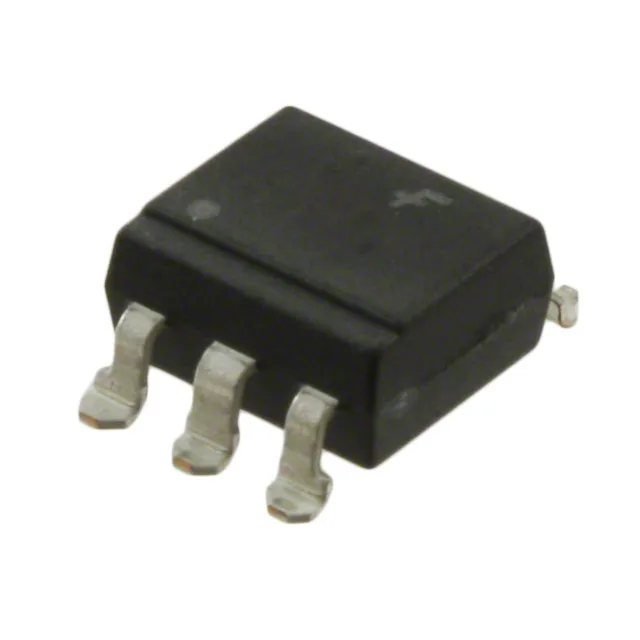
The FOD4108SDV comes in a 6-SMD Gull Wing package (6-SMD, Gull Wing) with a supplier device package of 6-SMD. The Gull Wing leads are visible and accessible — easy to hand-solder with a fine-tip iron or inspect under a microscope, unlike a QFN or BGA. The 1.27 mm (0.05-inch) lead pitch is standard for this class of optoisolator and matches common PCB footprints. Surface mount mounting type means it sits flat on the board — no through-hole leads to trim or solder on the back side.