5000Vrms isolation — the safety barrier spec
The headline rating is 5000Vrms isolation between input and output — this qualifies the FOD2741CTV for reinforced insulation in mains-connected equipment where the optocoupler must withstand a 5 kV dielectric withstand test per IEC 60950-1 or IEC 62368-1. The single-channel 8-DIP package provides one isolated path per device; a multi-channel design would need multiple units or a different part.
CTR range and drive current — what the 100-200% means for the BOM
This means with 10mA through the LED, the output transistor can sink at least 10mA and at most 20mA at the collector. For a design that needs guaranteed saturation into a 5V logic input, the 400mV Vce(sat) maximum ensures the output pulls below the logic low threshold — but only if the LED drive current is set within the CTR window. A 10mA LED current with a 1.5V forward drop burns 15mW on the input side; the 50mA output channel rating gives headroom for driving a relay coil or a PLC input module.
Through-hole 8-DIP — board-fit and replacement reality
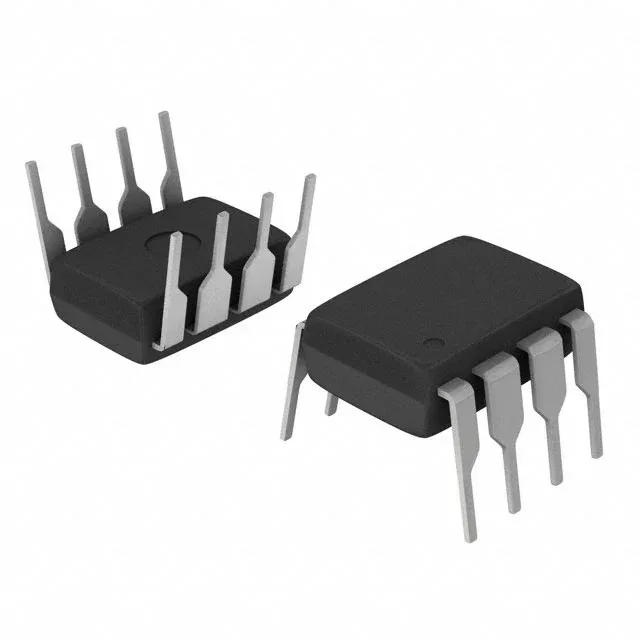
The 8-DIP package with 0.400-inch (10.16mm) body width is a standard through-hole footprint that has been in production for decades. The 8-MDIP supplier device package variant shares the same pinout and dimensions. For a rework lab or repair depot replacing this on an existing board, the through-hole format means hand-soldering is straightforward — no hot-air profile or reflow oven needed. The tube packaging is the standard shipping format for through-hole DIPs; each tube typically holds 50 units, though the exact count varies by lot.
Industrial temperature range and deployment context
The DC input type means the LED is driven by a DC signal — no AC coupling or rectification needed on the input side. The transistor output type is the classic phototransistor configuration: it switches in microseconds, suitable for 10-100 kHz signal isolation but not for high-speed data links.