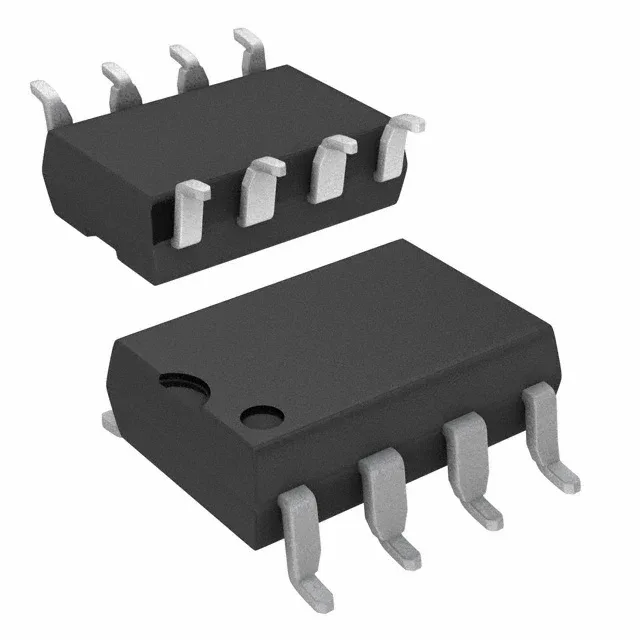
onsemi FOD260LSV — Optoisolators

FOD260LSV onsemi Optoisolator – 10Mbps, 5000Vrms

MPNFOD260LSV
End of Life

onsemi FOD260LSV, single-channel optoisolator, 10Mbps data rate, 5000Vrms isolation, open-collector Schottky-clamped output, DC input, 8-SMD Gull Wing package.

$2.77Ref. price · indicative, final on quote
Packaging8-SMD, Gull Wing
StockContact for availability
MOQ1 pcs
  • 100% new & originalTraceable channels only — no refurbs, no pulls, no remarked parts.
  • Date & lot codes on quoteStated per line before you commit; label photos on request.
  • MSL-compliant ESD packingMoisture-sealed bags with indicator cards; reels photo-verified.
  • PayPal buyer protectionPay by T/T, PayPal or Payoneer — card payments covered end to end.

Specifications

FOD260LSV Technical Specifications
ParameterValue
Input typeDC
Output typeOpen Collector, Schottky Clamped
Mounting typeSurface Mount
Voltage3V ~ 5.5V
Voltage - isolation5000Vrms
Voltage - forward (Vf)1.4V
Current - output (Channel)50 mA
Current - DC forward (If)50mA
Operating temperature-40°C ~ 85°C
PackageBulk
Data rate10Mbps
Case8-SMD, Gull Wing
Number of channels1
Inputs - side 1/Side 21/0
Rise (Fall time)22ns, 3ns
Propagation delay tpLH (tpHL)90ns, 75ns
Common mode transient immunity25kV/µs

Product details

Why the 5000Vrms isolation and 25kV/µs CMTI matter in a motor-drive link

The FOD260LSV is a single-channel optoisolator from onsemi that delivers 5000Vrms isolation with a minimum common-mode transient immunity of 25kV/µs. In a variable-frequency drive or industrial inverter, that CMTI rating is what keeps the data link from glitching when the IGBT or SiC stage switches — ground-potential differences across the isolation barrier can exceed 1 kV/µs easily, and a part with lower immunity will corrupt the logic state. The open-collector Schottky-clamped output lets the receiver side pull down to a separate supply rail (3V to 5.5V,) without fighting the LED forward drop. The 10Mbps data rate is enough for most encoder feedback, PLC digital I/O, and isolated RS-485 links — but not for high-speed fieldbus like EtherCAT where you'd need 50Mbps+ parts.

Parametric deep-dive: timing, drive, and temperature

Propagation delay is 90ns max tpLH and 75ns max tpHL — the asymmetry means the output pulse width can shrink by up to 15ns per edge, so budget that skew when cascading multiple optoisolators in a daisy-chain or synchronising two channels. Rise/fall times of 22ns and 3ns keep the output edge clean enough for a 10Mbps NRZ signal. The LED forward voltage is 1.4V typ with a maximum forward current of 50mA. The output can sink 50mA per channel — enough to drive a small relay coil or a 5V logic input directly, but not a 24V PLC input without a pull-up resistor sized for the supply rail. Industrial temperature range from -40°C to 85°C covers most factory-floor enclosures, but not the 105°C ambient you'd see inside a solar inverter or under-hood automotive module. If your BOM demands extended temperature, look at the FOD260L series variants with wider range.

Sourcing and lifecycle: active production, no end-of-life clock

The 8-SMD Gull Wing package is a standard footprint shared with the HCPL2601 and other 8-pin DIP optoisolators, which simplifies second-sourcing if needed. Sourced per RFQ — no stock-holding claim or firm price published here.

Frequently asked questions

Can FOD260LSV replace HCPL2601?

The FOD260LSV is a functional equivalent to the HCPL2601 — same 8-pin DIP Gull Wing footprint, same 10Mbps data rate, same 5000Vrms isolation. The key difference is the Schottky-clamped open-collector output which gives slightly faster fall time (3ns typ vs 7ns on the HCPL2601). Pin-compatible, but confirm the forward current and threshold levels match your drive circuit.

What is the data rate of FOD260LSV?

10Mbps maximum. The propagation delay asymmetry (90ns tpLH, 75ns tpHL) limits the practical NRZ data rate to about 10Mbps before pulse-width distortion becomes significant.