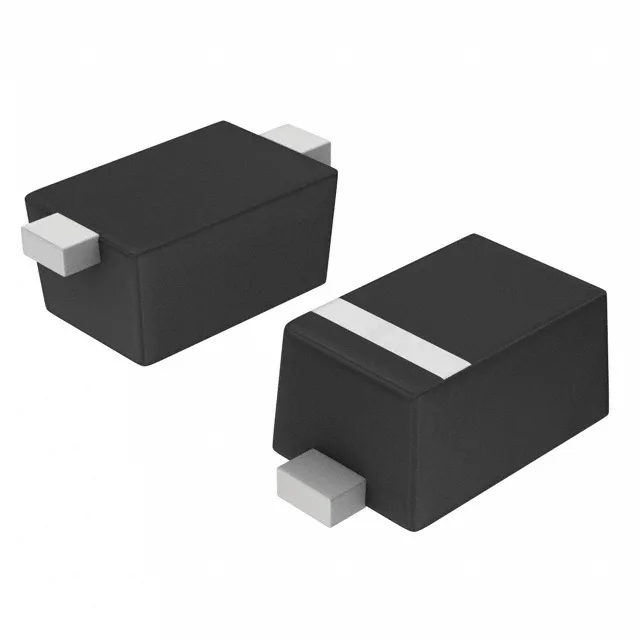
onsemi ESD5Z3.3T1G — Circuit Protection

ESD5Z3.3T1G onsemi Zener TVS – 158W, 3.3V, SOD-523

MPNESD5Z3.3T1G
Active

onsemi ESD5Z3.3T1G, Zener TVS diode, 158W peak pulse power, 3.3V reverse standoff, unidirectional, SOD-523 package, -55°C to 150°C junction temperature.

$0.06254Ref. price · indicative, final on quote
Sourced new & surplus through independent channelsAuthenticity-screened · ESD-safe packingListing updated Aug 2026

Specifications

ESD5Z3.3T1G specifications
ParameterValue
TypeZener
MountingSurface Mount
Voltage - breakdown5V
Voltage - clamping (Max) @ ipp14.1V
Voltage - reverse standoff3.3V (Max)
Current - peak pulse (10/1000μs)11.2A (8/20µs)
Power - peak pulse158W
Power line protectionNo
Capacitance @ frequency105pF @ 1MHz
Operating temperature-55°C~150°C(TJ)
PackageTape & Reel (TR); Cut Tape (CT)
ApplicationsGeneral Purpose
CaseSC-79, SOD-523
Unidirectional channels1

Product details

158W Zener clamp for 3.3V rails

The ESD5Z3.3T1G is a Zener-type TVS diode from onsemi, rated for 158W peak pulse power (8/20µs waveform) and a reverse standoff voltage of 3.3V max. That standoff means it sits on a 3.3V supply line without conducting until a transient pushes the voltage past the 5V breakdown minimum — then it clamps at 14.1V max to shunt the energy away from the protected IC.

Frequently asked questions

Is ESD5Z3.3T1G suitable for 3.3V signal lines?

Yes. The reverse standoff voltage is 3.3V max, so the diode does not leak at the nominal rail voltage. It starts clamping above 5V (breakdown min) and holds the clamp at 14.1V max, which is well within the absolute-max ratings of most 3.3V CMOS inputs.

Can ESD5Z3.3T1G replace ESD5Z3.3T1?

The base product number ESD5Z3.3 is shared — the suffix difference is typically a packaging or reel option. Both are the same die in the same SOD-523 package. Confirm the tape-and-reel quantity matches your assembly house requirements, but electrically they are interchangeable.

What is the peak pulse power of ESD5Z3.3T1G?

158W peak pulse power measured with an 8/20µs current waveform. That rating tells you how much transient energy the diode can absorb in a single event before the junction overheats.