Isolation and signal transfer — what the ratings mean
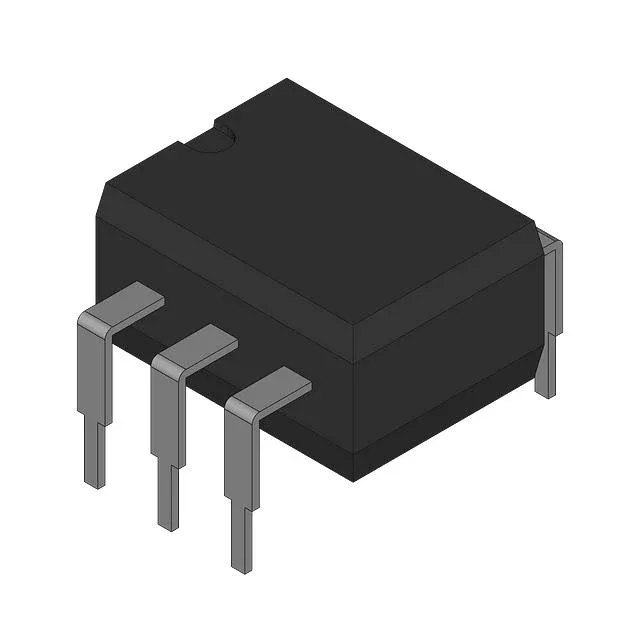
The CNY17F1VM: The 4170Vrms isolation rating qualifies this optocoupler for reinforced insulation in mains-referenced circuits — think isolated feedback in a 240VAC power supply or a PLC input channel where the field-side transient must not couple back to the logic ground. The 6-DIP package gives a 7.62mm creepage path between input and output pins, which is the physical enabler of that isolation voltage. Current transfer ratio (CTR) is the gain of the optocoupler: 40% minimum, 80% maximum at If=10mA. The 70V Vce(max) and 50mA continuous output current define the load side: it switches small DC loads, not AC or high-current ones. Switching speed is modest: 2µs turn-on, 3µs turn-off typical, with 4µs rise and 3.5µs fall max. This limits the part to DC-level or low-frequency (under ~50kHz) signal isolation — not suitable for high-speed digital buses like I²C or SPI without additional logic conditioning.
Temperature range and board integration
The part sits comfortably in factory-floor PLC I/O modules, motor drive feedback circuits, and HVAC controller boards where the enclosure ambient stays below 85°C. Through-hole DIP-6 footprint means hand-assembly or wave-solder — no reflow profile to manage. Bulk packaging suggests tray or tube delivery; no tape-and-reel for automated pick-and-place, which is typical for through-hole parts. Forward voltage is 1.35V typical at If=10mA, with an absolute max forward current of 60mA.