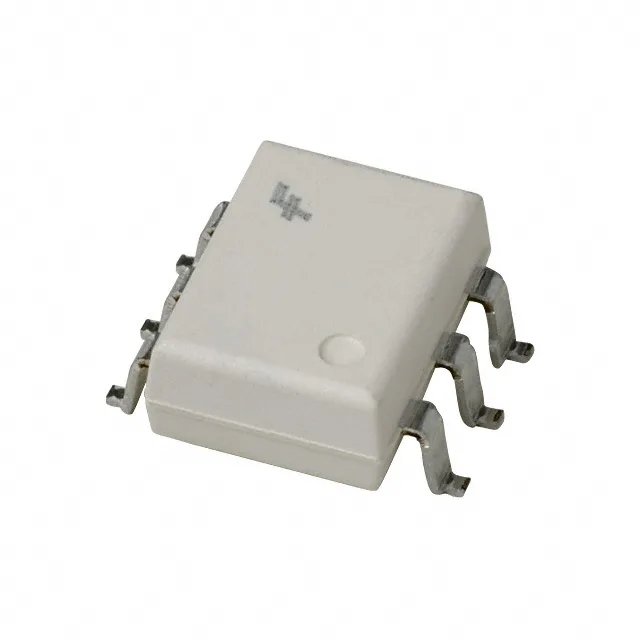
The CNY173FR2VM: That spread tells you the LED-to-phototransistor gain is tight enough to avoid overdriving the downstream logic or saturating the output stage across temperature and age — a 2:1 max/min ratio is tighter than many general-purpose optos that ship 50-600 %. Switching speed is characterised: 1 µs rise, 2 µs fall typical, with turn-on and turn-off times of 2 µs and 3 µs respectively. For a 50 mA output channel this is fast enough for 100 kHz-ish data rates or for de-glitching a 24 V PLC input — the base terminal lets you add a speed-up resistor if you need to shave the fall time.
Housed in a 6-SMD gull-wing package (supplier device package 6-SMD). The gull-wing leads give a visible solder joint for AOI and relieve mechanical strain between the opto and the board — important in a high-vibration environment. Tape-and-reel packaging means it feeds into a pick-and-place line without a reel change. That covers industrial enclosures and outdoor telecom cabinets but stops short of under-hood automotive — the 100 °C ceiling matches the typical derating for epoxy-moulded optos at full isolation voltage.
onsemi lists the CNY173FR2VM as Obsolete. For a BOM that already carries this part number, the remaining supply is held in independent-distribution surplus and broker channels — each lot is date-code and marking verified before it ships. Because this is an end-of-life part, the procurement decision is about lot traceability and authenticity. The laser-etched date-code on the body should match the onsemi plant format for the week code — any mismatch is a counterfeit flag.