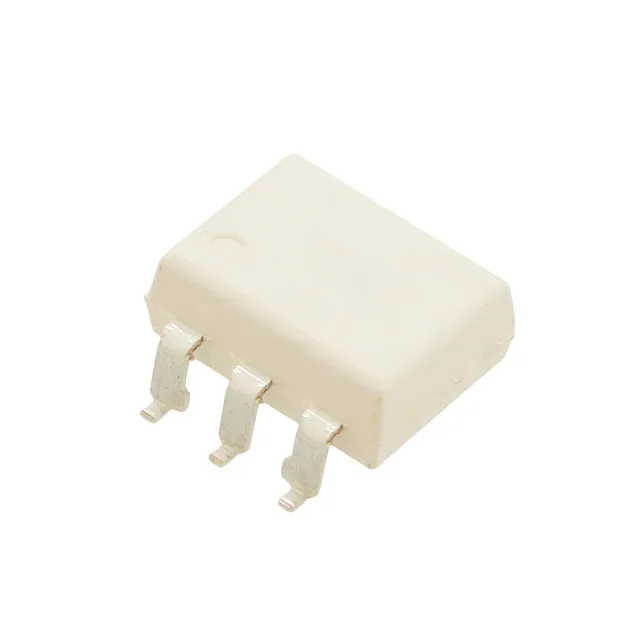
onsemi 4N29SR2M — Optoisolators

4N29SR2M 4170Vrms Darlington with Base

MPN4N29SR2M
End of Life

onsemi 4N29SR2M, single-channel DC-input Darlington-output optoisolator, 4170Vrms isolation, 100% min CTR at 10mA, 150mA output, 6-SMD gull-wing surface-mount package.

$0.99Ref. price · indicative, final on quote
Packaging6-SMD, Gull Wing
StockContact for availability
MOQ1 pcs
  • 100% new & originalTraceable channels only — no refurbs, no pulls, no remarked parts.
  • Date & lot codes on quoteStated per line before you commit; label photos on request.
  • MSL-compliant ESD packingMoisture-sealed bags with indicator cards; reels photo-verified.
  • PayPal buyer protectionPay by T/T, PayPal or Payoneer — card payments covered end to end.

Specifications

4N29SR2M Technical Specifications
ParameterValue
Input typeDC
Output typeDarlington with Base
Mounting typeSurface Mount
Voltage - isolation4170Vrms
Voltage - output30V
Voltage - forward (Vf)1.2V
Current - output (Channel)150mA
Current transfer ratio100% @ 10mA
Current - DC forward (If)80 mA
Operating temperature-40°C ~ 100°C
PackageTape & Reel (TR); Cut Tape (CT)
Case6-SMD, Gull Wing
Number of channels1
Vce saturation1V
Turn on (Turn off time)5µs, 40µs (Max)

Product details

Galvanic isolation with Darlington drive

The 4N29SR2M is a single-channel optoisolator from onsemi that couples a DC input LED to a Darlington phototransistor output with a base terminal. The 4170Vrms isolation rating makes it suitable for breaking ground loops and protecting low-voltage logic from high-side transients in industrial controls, motor drives, and power supplies. A minimum current transfer ratio of 100% at 10mA forward current means the output can sink at least as much current as the LED draws — no gain compression at the low end. The Darlington configuration delivers a continuous output current of 150mA and a Vce saturation of 1V max, so it can drive relays, solenoids, or PLC input modules directly without a buffer transistor.

Switching speed and load timing

Turn-on time is 5µs typical, but turn-off stretches to 40µs maximum. That asymmetry caps the practical switching frequency around 12 kHz — fine for 50/60 Hz line-cycle detection, relay coil switching, or status feedback from a contactor, but not for high-speed data isolation. If your application needs symmetric switching below 10µs, the 4N38SM (transistor output, 5µs turn-on/off) is a faster alternative, though its output current is limited to 100mA.

Active production, surface-mount package

It ships in Tape & Reel or Cut Tape, which matches automated pick-and-place assembly. The 6-SMD gull-wing footprint is the surface-mount variant of the classic 4N29 — the through-hole 4N29M is electrically identical but requires manual insertion.

Operating range and derating

The operating temperature spans -40°C to 100°C, covering industrial enclosures and outdoor telecom cabinets. The maximum forward LED current is 80mA, and the typical forward voltage is 1.2V — a 220-ohm series resistor from a 5V logic rail will bias the LED at about 17mA, well within the safe zone and above the 10mA test point for the CTR spec.

Frequently asked questions

Is the 4N29SR2M RoHS compliant?

Yes, the 4N29SR2M is ROHS3 compliant, meaning it meets the latest EU restriction on hazardous substances including the four phthalates.

What is the closest functional alternative to the 4N29SR2M?

The 4N33SM is the nearest surface-mount peer — same DC input, Darlington output with base, 4170Vrms isolation, and 150mA output current. The key difference is the turn-off time: 100µs max on the 4N33SM versus 40µs max on the 4N29SR2M. For through-hole designs, the 4N29M is electrically identical in a DIP-6 package. If you need faster switching, the 4N38SM (transistor output, 5µs turn-off) is an option but derates output to 100mA.