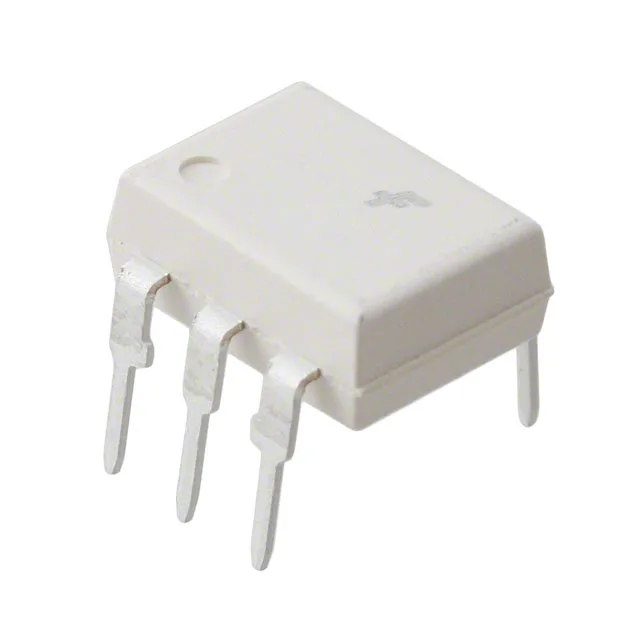
onsemi 4N28M — Optoisolators

4N28M onsemi Optoisolator – 4170Vrms, Transistor Output

MPN4N28M
Active

onsemi 4N28M, 1-channel DC-input optoisolator, transistor with base output, 4170Vrms isolation, 6-DIP through-hole package, tube

$0.6700Ref. price · indicative, final on quote
Packaging6-DIP (0.300", 7.62mm)
RoHSROHS3 Compliant
Independent supplier — new & surplus stockAuthenticity-screened · ESD-safe packingListing updated Aug 2026

Specifications

4N28M specifications
ParameterValue
Input typeDC
Output typeTransistor with Base
MountingThrough Hole
Voltage - isolation4170Vrms
Voltage - output30V
Voltage - forward (Vf)1.18V
Current transfer ratio10% @ 10mA
Current - DC forward (If)60 mA
Operating temperature-40°C ~ 100°C
PackageTube
Case6-DIP (0.300\", 7.62mm)
Channels1
Vce saturation500mV
Turn on (Turn off time)2µs, 2µs

Product details

Isolation voltage and signal path for industrial BOMs

The 4N28M is a 1-channel DC-input optoisolator with a transistor-with-base output, rated for 4170Vrms isolation between input and output sides. That isolation rating suits it for breaking ground loops and protecting low-voltage logic on the secondary side in motor drives, PLC digital inputs, and power-supply feedback paths. Typical turn-on and turn-off times of 2 µs each limit the useful switching frequency to roughly 100 kHz — adequate for 50/60 Hz line synchronisation, relay coil drive, or slow serial isolation.

Temperature range and output drive limits

Maximum output voltage is 30 V, and Vce saturation is 500 mV max at rated current — the output can pull a 5 V or 24 V logic input low with margin. Forward voltage typical is 1.18 V at 10 mA, and the LED can be driven up to 60 mA continuous.

Active lifecycle — no immediate obsolescence risk

For BOM planning, this means the part can be specified without a near-term requalification trigger, though sourcing should still be confirmed per order to avoid allocation shifts.

Frequently asked questions

Can 4N28M replace 4N25?

The 4N28M and 4N25 share the same 6-DIP package and 4170Vrms isolation rating, but the 4N28M has a transistor-with-base output, while the 4N25 is a simple phototransistor. The base connection on the 4N28M allows external bias or feedback, which can improve switching speed or sensitivity. Pin-for-pin compatibility depends on the base pin being left open or used — check the circuit before substituting.