7500Vpk isolation barrier
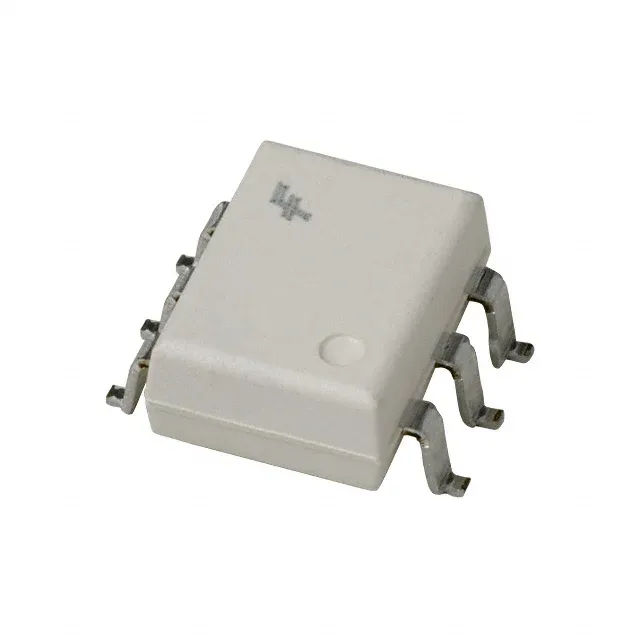
The 4N26FR2M is a single-channel phototransistor optoisolator from onsemi, rated for 7500Vpk isolation between input and output. That peak voltage rating suits it for applications where a reinforced barrier is needed between a low-voltage DC control side and a higher-voltage or noisy load side — think motor-drive feedback, industrial sensor interfaces, or power-supply error-amplifier isolation where the working voltage stays well below the peak rating. The output is a phototransistor with the base brought out, giving the designer the option to bias the base for faster switching or lower saturation voltage. Minimum current transfer ratio is 20% at 10 mA forward current, meaning the output transistor conducts at least 2 mA when the LED is driven at 10 mA — a typical threshold for logic-level interfaces.
Obsolete — sourcing reality
onsemi has marked the 4N26FR2M as obsolete. No official successor or second-source is recorded in the manufacturer's lifecycle data. A board designed around this package and pinout should budget a qualification cycle if a substitute is needed. The 6-SMD gull-wing package was common across the 4N26 family, so legacy boards using the DIP-6 through-hole variant or other SMD footprints will not drop in without a layout change. Confirm the BOM position's pad geometry against the 6-SMD gull-wing land pattern before committing.
Switching and thermal envelope
Typical turn-on and turn-off times are 2 µs each, which gives a practical switching ceiling around 250 kHz in a saturated switch configuration — adequate for isolated gate-drive feedback or low-speed data isolation but not for high-speed digital buses. Vce saturation is 500 mV maximum at the rated collector current, keeping the on-state voltage drop low enough to drive a 5 V logic input directly. Operating temperature spans -55°C to 100°C, covering industrial and most military-temperature applications. The forward LED current is rated up to 60 mA DC; the output transistor blocks 30 V maximum. These ratings are typical for the 4N26 class and constrain the part to low-power signal isolation rather than power-level gate drives.