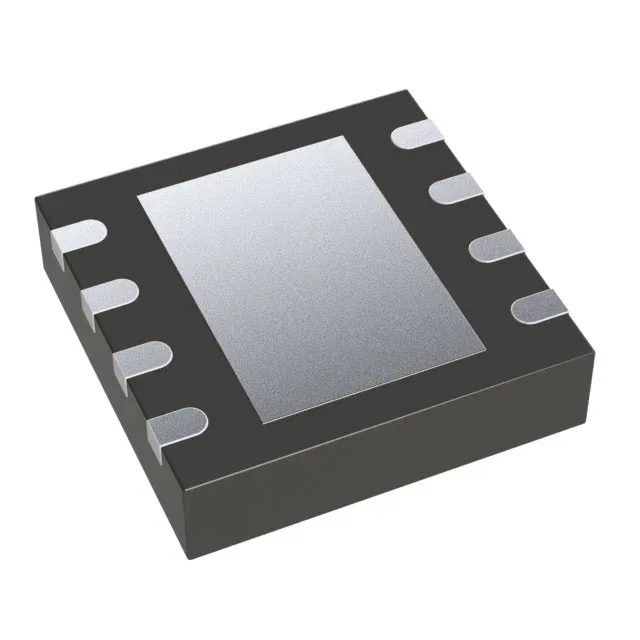
TJA1044VTK/3Z

NXP Semiconductors

NXP TJA1044VTK/3Z automotive CAN transceiver, half-duplex, 1/1 driver/receiver, 5 Mbps data rate, 4.75V–5.25V supply, AEC-Q100, -40°C to 150°C junction, 8-HVSON (3x3) package.

NXP Semiconductors TJA1044VTK/3Z
Download datasheet (PDF)
[IN STOCK] In Stock: 10 pcs
$1.85/ pc

Volume pricing

Buy Now

MOQ 1 · Tape & Reel (TR); Cut Tape (CT) · RoHS · EIA-481 · DAP/DDP · T/T

Technical specifications

TJA1044VTK/3Z specifications
Parameter / AttributeSpecification / Value
TypeTransceiver
MountingSurface Mount
Supply voltage4.75V ~ 5.25V
ProtocolCANbus
Operating temperature-40°C ~ 150°C (TJ)
GradeAutomotive
DuplexHalf
PackageTape & Reel (TR); Cut Tape (CT)
Data rate5Mbps
QualificationAEC-Q100
Case8-VDFN Exposed Pad
Receiver hysteresis300 mV
Number of drivers (Receivers)1/1
100% Footprint Match · Solder-Ready (No PCB Redesign Needed)

Need Stock or a Drop-in Second-Source for TJA1044VTK/3Z?

Package: SO-8 · Pin-compatible replacements with immediate Shenzhen spot stock

Footprint Match 98%
Supply Chain & Allocation Reality:

The TJA1050 is the CAN transceiver of a generation of automotive and industrial boards - 5V supply, classic CAN up to 1Mbps, SO-8. It is also where the field splits in three directions buyers keep confusing: the pin-compatible TJA1051 upgrade (same footprint, CAN FD to 5Mbps), the standby-mode TJA1042, and the entirely different 3.3V camp (SN65HVD230) whose parts are neither pin- nor supply-compatible with the 5V family despite looking alike. The transceiver sits on the same board as the vehicle network - the substitution has to match supply AND protocol class before the footprint conversation even starts.

Verified Pin-Compatible Replacements (4 verified alternatives)

TJA1051 NXP SO-8
100% Drop-in (Zero Code Change)
Availability & Target Pricing:

The CAN FD Upgrade in the Same Footprint

Shenzhen Spot Stock (24-48h Dispatch)

Electrical & Core Specs:

The direct successor: same SO-8 pinout and 5V supply, with CAN FD support to 5Mbps across the whole series - the standard pin-compatible path forward from the 1050.

5V supply; the /3 variant adds a VIO pin for direct 3.3V MCU interfacing (keep the original circuit when not using it).

Compatibility & Drop-In Notes: The chip-side protocol changes with CAN FD: on a classic-CAN network the part runs in the old mode, and firmware/tooling must match the network before the extra rate is usable. As a straight replacement of a 1050 in a classic network it behaves as one.
Package & Solder Footprint: SO-8 land pattern identical; the TJA1050 was essentially superseded by this part.
Shenzhen Warehouse Stock & MOQ: Active production; the mainstream NXP CAN line in Shenzhen stock.
TJA1042 NXP SO-8
Pin-to-Pin (Minor Clock/Init Tuning)
Availability & Target Pricing:

Standby Mode and SPLIT Pin

Shenzhen Spot Stock (24-48h Dispatch)

Electrical & Core Specs:

The standby-featured member: CAN FD to 5Mbps, 5V supply, with a SPLIT pin for bus common-mode stabilization and standby for sleep architectures.

5V; the /3 variant for 3.3V MCU interfacing; replaces the older TJA1040.

Compatibility & Drop-In Notes: Genuinely pin-compatible at the SO-8 level but functionally richer: if the design does not use standby, wire it per the datasheet (usually tied off) rather than left random.
Package & Solder Footprint: SO-8; SPLIT pin behavior differs from the plain 1050 pin.
Shenzhen Warehouse Stock & MOQ: Stocked across the family; the automotive-grade line.
SN65HVD230 Texas Instruments SO-8
Functional Equivalent
Availability & Target Pricing:

The 3.3V Camp - Different Rules

Shenzhen Spot Stock (24-48h Dispatch)

Electrical & Core Specs:

The 3.3V CAN transceiver: classic CAN to 1Mbps on a 3.3V rail - designed for 3.3V MCUs directly, not for 5V sockets.

3.3V supply - placing one in a 5V TJA1050 socket is a supply error before it is a signal error.

Compatibility & Drop-In Notes: The classic field mistake this page exists for: the 5V TJA/MCP family and the 3.3V TI family share the SO-8 look and neither pin nor supply behavior. Choose by the MCU rail, then by CAN versus CAN FD.
Package & Solder Footprint: SO-8 body, different supply and logic thresholds.
Shenzhen Warehouse Stock & MOQ: Deep stock; the mainstream 3.3V choice.
MCP2551 Microchip SO-8 / DIP-8
Functional Equivalent
Availability & Target Pricing:

The Other 5V Classic

Shenzhen Spot Stock (24-48h Dispatch)

Electrical & Core Specs:

The Microchip classic 5V CAN transceiver, 1Mbps, long established in industrial boards alongside the TJA1050.

5V supply; same classic-CAN class as the TJA1050.

Compatibility & Drop-In Notes: In the same 5V classic-CAN class as the TJA1050, the choice usually follows the board documentation and the controller pairing rather than electrical difference. Confirm pin behavior against the specific datasheet before crossing brands in automotive designs.
Package & Solder Footprint: SO-8 / DIP-8; verify the exact variant outline.
Shenzhen Warehouse Stock & MOQ: Universal stock; MCP2515 pair kitted on request.
Buyer & Quality Checklist for Sourcing Alternatives
  • Match the supply camp first: TJA1050/TJA1051/TJA1042/MCP2551 run 5V; SN65HVD230 runs 3.3V. The two camps look identical in SO-8 and are not interchangeable.
  • Match the protocol class second: TJA1050 and MCP2551 are classic CAN (1Mbps); the TJA1051/1042/1044 (G variants) do CAN FD to 5Mbps. Fitting an FD part on a classic network is safe (it runs classic); the reverse direction limits the bus.
  • The TJA1050 to TJA1051 move is the one true pin-compatible upgrade - and the /3 suffix (VIO pin) changes the wiring conversation even though the footprint stays.
  • The TJA1044 (MANTIS) removed the SPLIT pin from the 1042 lineage: circuits that used SPLIT need their common-mode stabilization reviewed when crossing those two.
  • Termination is board-side physics: 120-ohm bus ends, stub length and common-mode choke were tuned around the original transceiver - check them when the part changes speed class.
  • For fleet repairs keep the two camps physically separated in the parts drawer; the most expensive CAN repair error is a 5V part in a 3.3V socket found after the smoke test.
Frequently Asked Technical Questions

Q: Is TJA1051 a drop-in for TJA1050?

A: Yes - the same SO-8 footprint and 5V supply, with CAN FD added across the series. The /3 variant routes 3.3V logic via a VIO pin; verify that pin handling when substituting into a plain 1050 circuit.

Q: Can I use SN65HVD230 instead of TJA1050?

A: Not in a 5V socket: the SN65HVD230 is a 3.3V part. The two look alike in SO-8 and belong to different supply camps - pick by the MCU rail first, then by CAN versus CAN FD.

Q: What is the difference between TJA1042 and TJA1044?

A: The 1044 is the newer MANTIS-family successor: standby stays, the SPLIT pin is removed, and only the G variants carry the full CAN FD rating. Circuits using SPLIT need a review when crossing from 1042.

Technical details

The NXP TJA1044VTK/3Z is a half-duplex CAN transceiver designed for automotive and industrial high-speed CAN networks. It interfaces a CAN protocol controller (typically an MCU with built-in CAN) to the physical two-wire CAN bus, handling the differential signaling, bus fault protection, and wake-up detection. The part supports data rates up to 5 Mbps, covering both classical CAN (up to 1 Mbps) and CAN FD (flexible data rate) frames.

The 5 Mbps data rate is the headline performance spec: it tells you this transceiver can handle CAN FD frames with the faster data phase, not just classical CAN at 500 kbps or 1 Mbps. If your design uses CAN FD for firmware updates or high-throughput sensor data, this part supports it. The supply voltage range of 4.75V to 5.25V means it runs from a standard 5V rail; do not try to power it from 3.3V without a regulator.

The TJA1044VTK/3Z comes in an 8-VDFN exposed pad package (supplier device package 8-HVSON, 3x3 mm). The surface-mount footprint is compact, suited for space-constrained ECU or sensor node PCBs.

It is ROHS3 compliant.

TJA1044VTK/3Z
[ALLOC] verified
Quote