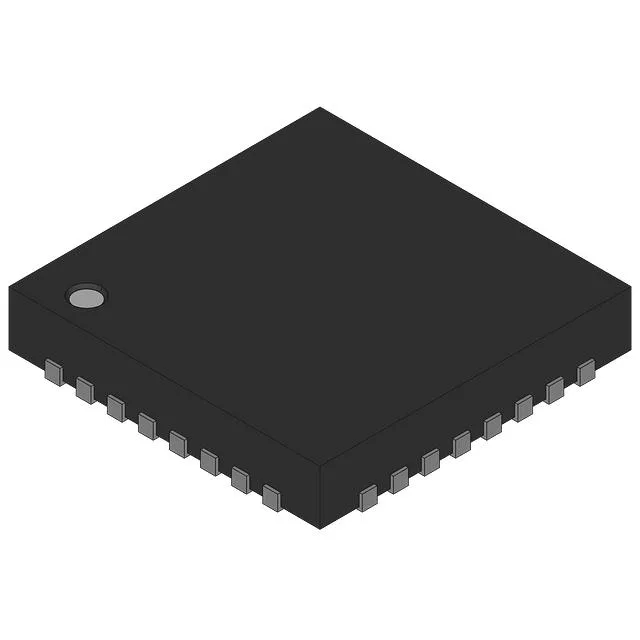
75 MHz Cortex-M0+ for motor-control loops
The NXP MKV10Z16VFM7 is a Kinetis KV10-series 32-bit MCU built around the ARM Cortex-M0+ core running at 75 MHz. It is engineered for cost-sensitive motor-control and power-conversion applications where the core speed directly determines the PWM update rate and current-loop bandwidth. The KV10 family targets appliance, industrial-drive, and automotive body-control designs that need a deterministic interrupt response without the overhead of a full M4 FPU.
That means NXP continues to manufacture and support the part for new design-ins. No last-time-buy window to track, no end-of-life paperwork to file.
Package and power-rail notes
If your pick-and-place line expects reeled parts, factor in a transfer step or confirm the packaging variant with your distributor. The 75 MHz core draws its supply from a single 3.3 V rail; decoupling should follow the reference design in the KV10 datasheet to keep the PLL clean. The Cortex-M0+ debug interface (SWD) stays alive even with the watchdog armed, which simplifies firmware bring-up on the first prototype.
Where it fits vs. the MK51DX128CMC7
The closest peer in the NXP portfolio is the MK51DX128CMC7, a 72 MHz Cortex-M4 MCU with a different memory and peripheral mix. The KV10 trades the M4 DSP/FPU for a leaner M0+ core, which keeps the BOM cost lower for applications that do not need floating-point math. Both parts share the Kinetis family peripheral set — FlexTimer, ADC, UART, SPI — so a board designed for one can often be re-targeted to the other with a firmware port.